
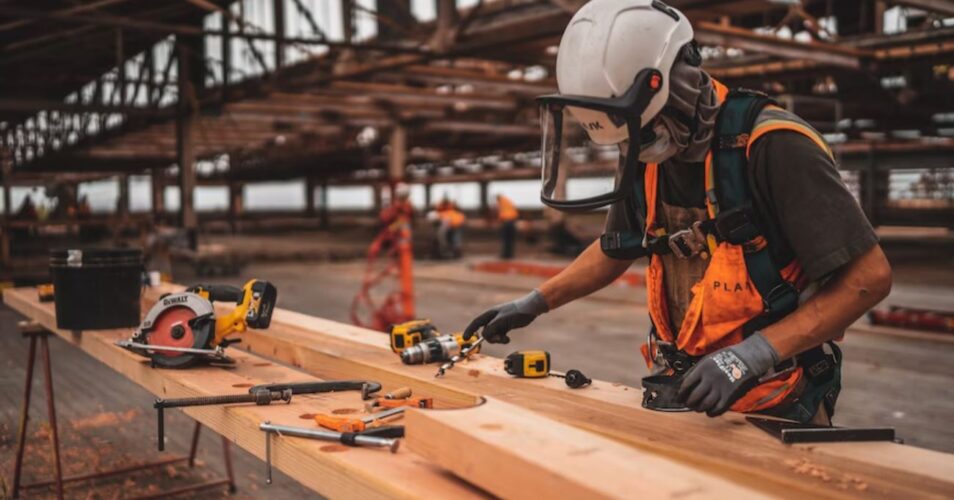
Construction sites are busy, constantly changing environments where multiple teams, contractors, vehicles, tools, equipment and materials can all be working alongside one another.
Work at height may be taking place above ground-level activities, plant may be moving around pedestrians, deliveries can alter access routes and different trades may need to work within the same area. With so many activities taking place simultaneously, effective supervision is an essential part of maintaining a safe construction site.
A good construction site supervisor does far more than simply make sure a job gets finished on time. Supervisors have an important role in ensuring workers understand the risks associated with their tasks, agreed control measures are followed and changes in site conditions are identified before they contribute to an accident.
Under the Construction (Design and Management) Regulations 2015 (CDM 2015), contractors must plan, manage and monitor construction work under their control so it is carried out without risks to health and safety. Contractors must also provide workers under their control with appropriate supervision, instructions and information.
This makes competent supervision an important connection between what has been planned on paper and what actually happens on site.
For people who already have supervisory responsibilities or are preparing to take the next step in their construction career, the CITB Site Supervision Safety Training Scheme (SSSTS) has been specifically designed to develop the health and safety knowledge required by construction supervisors.
At SAMS LTD, our CITB Site Supervisor Safety Training (SSSTS) Course provides two days of focused SSSTS training, helping delegates understand their responsibilities and develop practical knowledge that can be applied when supervising construction activities.
What Does a Construction Site Supervisor Do?
A construction site supervisor acts as an important link between site management and the workforce.
Site management may establish plans, procedures and expectations, but supervisors are often much closer to the work as it actually takes place. This puts them in an excellent position to spot developing problems, communicate instructions and make sure agreed controls are being applied correctly.
The exact responsibilities will vary depending on the project, employer and supervisor’s role, but supervision can commonly involve:
- Monitoring work activities and changing site conditions
- Identifying hazards and potential risks
- Checking that control measures are being followed
- Communicating health and safety information
- Delivering or supporting site inductions and toolbox talks
- Checking that workers understand safe working procedures
- Monitoring contractors and subcontractors
- Challenging unsafe practices
- Reporting accidents, incidents and near misses
- Escalating health and safety concerns to site management
- Encouraging workers to raise concerns about health and safety
HSE guidance emphasises that employers need to provide an appropriate level of supervision, with supervisors understanding the hazards associated with the work and the precautions that need to be taken.
Effective supervision therefore isn’t simply about watching people work. It involves understanding what should be happening, recognising when reality differs from the plan and knowing when intervention is required.
These are exactly the kinds of responsibilities that make appropriate SSSTS training valuable for current and aspiring construction supervisors.
How Do Site Supervisors Help Prevent Accidents?
Accident prevention isn’t simply about responding after something has gone wrong.
The most effective approach is to identify hazards, establish suitable controls, communicate those controls and continually check that they remain appropriate as work progresses.
Construction supervisors can contribute to every stage of that process.
A supervisor who notices that an exclusion zone has been moved, a worker isn’t following the agreed method, weather conditions have deteriorated or two contractors are beginning to interfere with each other’s activities has an opportunity to intervene before somebody is injured.
That ability to recognise problems and take appropriate action is one of the reasons competent supervision is so important.
1. Identifying Hazards Before Work Starts
One of the first steps in preventing accidents is understanding what could go wrong.
Construction activities can involve hazards associated with:
- Working at height
- Moving vehicles and plant
- Excavations
- Lifting operations
- Electrical equipment
- Falling objects
- Slips, trips and falls
- Dust and hazardous substances
- Noise and vibration
- Manual handling
- Temporary works
The specific hazards will depend on the project and activities taking place. A supervisor therefore needs to understand the work being undertaken rather than relying on a generic checklist.
Importantly, identifying hazards isn’t something that should happen once at the beginning of a project and then be forgotten.
Construction sites change.
A work area that was suitable yesterday could be different today because materials have arrived, scaffolding has been altered, another contractor has started work nearby, an access route has changed or adverse weather has affected conditions.
Effective supervisors remain alert to these changes.
This is one of the areas where completing a CITB SSSTS course can strengthen a supervisor’s knowledge. The course considers hazard identification, risk assessment and control measures within the context of construction supervision.
2. Making Sure Risk Assessments Are Put Into Practice
Producing a risk assessment isn’t the end of the risk-management process.
A beautifully written document sitting in an office will do very little to protect somebody if the controls identified within it aren’t actually implemented on site.
Supervisors can help bridge that gap.
Before and during work, they can check whether employees understand the hazards associated with the activity and whether the precautions established for that work are actually being followed.
Depending on the task, this could include checking that:
- Suitable access and egress are available
- Personal protective equipment is being used correctly
- Exclusion zones are established and maintained
- Plant and equipment are being used appropriately
- Agreed safe working methods are followed
- Barriers and signage remain in position
- Work areas are kept organised
- Changes to the work are communicated
- Workers understand the relevant method statement
- New hazards are reported and addressed
Risk assessment, control measures and supervisory responsibilities form an important part of the SSSTS training course.
For a supervisor, understanding risk assessment isn’t simply about knowing how the paperwork works. It is about understanding how the controls identified through that process translate into practical actions on site.
3. Communicating Safety Information
You can have excellent procedures, comprehensive risk assessments and carefully prepared method statements, but they will only achieve their purpose if the people carrying out the work understand what is expected of them.
This makes communication one of a supervisor’s most important skills.
Safety information can be communicated through:
- Site inductions
- Toolbox talks
- Daily briefings
- Method statement briefings
- Pre-start meetings
- One-to-one conversations
- Safety alerts
The method used should be appropriate to the information being communicated and the people who need to understand it.
It is also important to recognise that good communication isn’t simply talking at workers. Supervisors need to be prepared to listen, answer questions and encourage people to raise concerns.
Workers carrying out a task may notice a problem that wasn’t apparent during planning. Creating an environment in which they feel comfortable reporting that problem can help risks to be addressed earlier.
The CITB SSSTS course places considerable importance on effective communication, including site inductions, toolbox talks and safety briefings. For someone moving into supervision, developing the confidence to communicate health and safety information effectively can be every bit as important as understanding the technical content itself.
4. Monitoring Workers During the Job
Good supervision doesn’t finish once everyone has been briefed and work begins.
Construction activities need to be monitored as they progress.
This is particularly important because the conditions under which work is taking place can change. Controls that were suitable at the beginning of a task may become less effective if circumstances change.
A supervisor should remain alert for signs that:
- Workers aren’t following the agreed method
- Control measures have been removed, altered or damaged
- New hazards have appeared
- Contractors are interfering with one another’s work
- Plant or equipment is being used incorrectly
- Site conditions have changed
- Workers are taking shortcuts
- The original plan is no longer suitable
This doesn’t mean standing over every worker every second of the day. The level of supervision should reflect the risks, the nature of the work and the competence of those carrying it out.
However, supervisors need sufficient visibility of the work to recognise when something has changed or isn’t being done as expected.
An effective supervisor doesn’t assume that because the morning briefing was completed, everything will remain safe for the rest of the day.
5. Challenging Unsafe Behaviour
Recognising unsafe behaviour is only useful if something is done about it.
Supervisors must therefore be prepared to intervene when they identify practices that could put people at risk.
Depending on the circumstances, that might involve stopping work, speaking to the individuals concerned, explaining the hazard, restoring appropriate controls or escalating the matter to site management.
This can sometimes be one of the more difficult aspects of becoming a supervisor.
Yesterday you may have been working alongside somebody as a colleague. Today, as their supervisor, you may need to challenge them because they’re taking an unsafe shortcut.
That’s where good communication and leadership become particularly important.
The purpose shouldn’t simply be to catch somebody doing something wrong. A more effective intervention helps the worker understand why the behaviour is unsafe, what should be done instead and why the required control matters.
Timely intervention and monitoring form part of the knowledge developed through SSSTS training.
6. Leading by Example
A supervisor’s behaviour sends a message to the rest of the workforce.
It is difficult to convince workers that health and safety rules matter if the person supervising them ignores those same rules whenever they’re inconvenient.
Supervisors should therefore demonstrate the standards they expect from everyone else.
That includes:
- Wearing required PPE
- Following site access arrangements
- Using agreed safe systems of work
- Reporting hazards
- Participating properly in safety briefings
- Avoiding unsafe shortcuts
- Challenging dangerous conditions
- Taking workers’ concerns seriously
Leadership doesn’t always mean making speeches or giving orders.
Often, it is demonstrated through everyday behaviour.
When workers consistently see their supervisor treating health and safety seriously, addressing problems and following procedures themselves, it reinforces the message that safe working is simply part of how the site operates.
Developing a positive health and safety culture is an important theme within CITB SSSTS training.
7. Coordinating Different Trades and Contractors
Construction sites rarely involve a single team carrying out one isolated activity.
Electricians may be working alongside decorators, scaffolders alongside roofers, groundworkers alongside plant operators and delivery drivers alongside pedestrians.
Individually, each activity may have been properly planned. Problems can arise when those activities begin to interact.
For example, one contractor could block another team’s access route. A delivery could affect a pedestrian segregation system. Work at height could introduce risks to people working below. Dust from one activity could affect workers in another area.
Supervisors can play an important role in identifying these interfaces.
Good supervision involves looking beyond an individual task and considering what else is happening nearby. Where conflicts are identified, supervisors can communicate with other teams and site management so the work can be coordinated safely.
8. Responding When Site Conditions Change
Construction rarely goes exactly according to plan.
Weather changes. Deliveries are delayed. Equipment breaks down. Workers are absent. Designs change. Contractors arrive earlier or later than expected.
The danger comes when people continue working according to the original plan even though the conditions on which that plan was based have changed.
An effective supervisor should recognise when a change is significant enough to require the work to be reconsidered.
That could mean pausing the task, consulting the relevant risk assessment or method statement, speaking to site management, arranging an additional briefing or ensuring revised controls are introduced.
Knowing when not to continue can be just as important as knowing how to get the job completed.
9. Learning From Near Misses and Incidents
Accident prevention also means learning from warning signs.
A near miss may not result in an injury, but it can reveal a weakness in a working method, control measure, communication process or site arrangement.
Supervisors should encourage workers to report incidents and near misses rather than dismissing them because nobody was hurt.
Where appropriate, supervisors can help establish what happened, communicate immediate lessons and make sure concerns are escalated through the correct channels.
The objective is not to assign blame automatically. It is to understand whether something needs to change to prevent a similar situation from producing a more serious outcome next time.
Why Is Good Supervision Important Under CDM 2015?
The Construction (Design and Management) Regulations 2015 place responsibilities on different dutyholders involved in construction projects.
HSE states that contractors must plan, manage and monitor construction work under their control so it is carried out without risks to health and safety. For projects involving more than one contractor, contractors must coordinate their activities with others and comply with directions given by the principal designer or principal contractor.
Contractors are also required to provide appropriate supervision, instructions and information to workers under their control.
Competence is another important consideration. CDM requires organisations to have appropriate organisational capability and individuals to possess the necessary skills, knowledge, training and experience for the work they undertake.
This is where capable site supervision becomes particularly important.
A supervisor can help translate wider project health and safety arrangements into everyday site behaviour. They may be the person checking whether an agreed method is actually being followed, answering a worker’s question, identifying a change in conditions or raising an issue with management.
The Connection Between SSSTS and Accident Prevention
The Site Supervision Safety Training Scheme (SSSTS) is a CITB Site Safety Plus course specifically designed for people who have, or are about to acquire, supervisory responsibilities within the construction industry.
CITB describes the two-day course as helping supervisors understand the laws and regulations affecting safe working in construction and civil engineering, while highlighting the importance of risk assessment, control measures and effective communication in maintaining a positive health and safety culture.
An SSSTS course typically addresses subjects including:
- Health and safety legislation
- Supervisory responsibilities
- Risk assessments
- Method statements
- Hazard identification and control
- Site inductions
- Toolbox talks
- Monitoring site activities
- Occupational health
- Accident prevention
- Communication and leadership
- Positive health and safety culture
This makes CITB SSSTS particularly relevant to people who need to understand not only what safe construction work looks like, but also their role in helping others work safely.
The course isn’t intended to make a supervisor solely responsible for everything that happens on a construction site, nor does holding an SSSTS certificate replace an employer’s wider legal responsibilities.
Instead, SSSTS training develops knowledge that can help supervisors perform their own role more effectively as part of the site’s overall health and safety arrangements.
Who Can Benefit From SSSTS Training?
The SSSTS course is intended for people who have, or are about to have, supervisory responsibilities.
CITB confirms there are no formal entry requirements, although delegates should hold or be about to hold the role of a supervisor.
That means an SSSTS training course can be particularly suitable for:
- Construction site supervisors
- Foremen
- Team leaders
- Chargehands
- Working supervisors
- Assistant site managers
- Experienced construction workers moving into supervision
It can also be valuable for employers looking to develop experienced workers and prepare them for greater responsibility.
Someone can be highly experienced at their trade without automatically having all the knowledge required to supervise others. Moving into supervision changes the nature of your responsibilities, particularly around communication, monitoring, leadership and health and safety.
Completing a recognised CITB SSSTS course can help bridge that gap.
How Can SSSTS Training Help a Site Supervisor?
No training course can eliminate every hazard or prevent every accident.
What good training can do is give supervisors a stronger understanding of their responsibilities and help them develop a more structured approach to managing health and safety within their role.
An SSSTS course can strengthen knowledge in several important areas.
Risk Management
Supervisors need to understand how hazards are identified, how risks are assessed and why control measures are introduced.
This allows them to look beyond the paperwork and consider whether those controls are actually working in practice.
Communication
Giving an instruction doesn’t necessarily mean it has been understood.
SSSTS training considers communication within construction supervision, helping delegates appreciate the importance of inductions, toolbox talks, briefings and effective interaction with workers.
Monitoring
Supervisors need to recognise that health and safety arrangements must be monitored.
That includes checking that agreed working methods are followed and identifying when changing conditions mean the original controls may no longer be appropriate.
Leadership
A good supervisor can influence how an entire team approaches health and safety.
Leading by example, challenging unsafe behaviour and responding positively when workers raise concerns can all contribute towards a stronger site safety culture.
Legal Responsibilities
Construction supervisors need an appropriate understanding of the legal framework surrounding their work.
The CITB SSSTS course helps delegates develop their understanding of relevant health and safety law and how it relates to supervision.
Accident Prevention
Perhaps most importantly, the different elements of the course come together around prevention.
Recognising hazards, communicating controls, monitoring work and intervening at the right time can all help reduce the likelihood of something going wrong.
Creating a Positive Safety Culture on Construction Sites
Accident prevention isn’t only about rules, paperwork and PPE.
The culture of a construction site can have a significant influence on how people behave.
If shortcuts are routinely ignored, concerns are dismissed and workers believe productivity always comes before safety, unsafe behaviour can become normalised.
Supervisors are in a particularly strong position to influence this because of their regular contact with the workforce.
A supervisor who listens to concerns, acts when hazards are reported, explains why controls matter and consistently reinforces agreed standards can help make health and safety part of everyday site activity.
HSE also emphasises consultation and worker involvement. Workers often have detailed knowledge of the jobs they perform and can provide valuable insight into the risks and practical effectiveness of controls.
Good supervision therefore shouldn’t create a culture where workers are afraid to speak.
It should help create one where somebody feels comfortable saying, “This doesn’t look right” before an accident occurs.
What Should a Construction Site Supervisor Check?
Effective supervision needs to be practical and proportionate to the work taking place.
Rather than simply completing paperwork, supervisors should continually consider whether the work is being carried out as planned and whether the controls remain suitable.
Before Work Starts
A supervisor may need to consider:
- Are workers competent and appropriately trained?
- Have the relevant hazards been identified?
- Are appropriate risk assessments and method statements available?
- Do workers understand the planned method of work?
- Has the relevant site induction or briefing been completed?
- Are required control measures in place?
- Is the work properly coordinated with other activities?
- Have any site conditions changed since the work was planned?
Starting with these questions can identify problems before people become exposed to them.
During the Work
Once the activity begins, the supervisor should continue monitoring what is happening:
- Are workers following the agreed safe system of work?
- Are control measures still effective?
- Has anything changed?
- Are different trades working safely alongside one another?
- Are plant, tools and equipment being used appropriately?
- Have new hazards appeared?
- Are workers raising concerns?
- Are shortcuts beginning to develop?
A safe start doesn’t guarantee a safe finish. Ongoing supervision matters.
After Identifying a Problem
When something isn’t right, the supervisor needs to consider what happens next:
- Is immediate action required?
- Does the work need to stop?
- Can the problem be corrected safely?
- Does the risk assessment or method statement need reviewing?
- Does the workforce require another briefing?
- Should the issue be reported or escalated?
- Could the same problem exist elsewhere on site?
- Is there a wider lesson that should be communicated?
This continual cycle of checking, communicating, monitoring and acting is at the heart of effective construction supervision.
Why Construction Companies Should Invest in Supervisor Training
Construction health and safety is a shared responsibility, but supervisors occupy an especially important position because they’re involved in the practical delivery of work.
Businesses shouldn’t assume that an experienced worker will automatically become an effective supervisor simply because they know their trade.
Supervision introduces different responsibilities.
A new supervisor may suddenly need to interpret risk assessments, brief method statements, deliver toolbox talks, monitor colleagues, challenge unsafe practices and communicate with site management.
Providing appropriate SSSTS training can help employees prepare for that transition.
For employers, investing in SSSTS courses can also support workforce development. Experienced operatives who already understand the organisation, its projects and its working methods can develop the additional health and safety knowledge associated with supervision.
Rather than viewing an SSSTS training course simply as the cost of obtaining another certificate, employers can see it as an investment in the people responsible for influencing standards at site level.
Why Take an SSSTS Course Online?
Finding time for training can be challenging in construction, particularly when workers are based across different sites.
That’s why SAMS offers an SSSTS course online, delivered through live remote training via Zoom.
Choosing one of our SSSTS courses online allows delegates to participate in instructor-led training without having to travel to a conventional training venue. This can reduce travelling time and make arranging training more convenient for individuals and businesses with employees working across different locations.
Importantly, an SSSTS online course isn’t simply a self-paced e-Learning programme that leaves delegates working through material alone.
It is live training, providing opportunities to engage with the trainer, discuss construction scenarios, ask questions and participate throughout the course.
For employers arranging SSSTS training online for supervisors or employees preparing for promotion, this can provide a practical way of accessing recognised CITB training while reducing unnecessary travel.
What Do You Get After Completing the CITB SSSTS Course?
Delegates who successfully meet the course requirements receive a CITB SSSTS certificate.
CITB states that the certificate is valid for five years. To remain certified, delegates need to complete the relevant SSSTS Refresher before their certificate expires.
The certificate provides recognised evidence that the delegate has successfully completed the Site Supervision Safety Training Scheme.
But the real value of the course shouldn’t be measured solely by the certificate.
The objective is to take what you’ve learned back to the construction site and apply it when communicating with workers, monitoring activities, recognising hazards and responding to unsafe situations.
Why Choose SAMS for Your SSSTS Training?
At SAMS LTD, we provide professional health and safety and construction training designed to help individuals and businesses develop practical workplace knowledge.
Our CITB Site Supervisor Safety Training (SSSTS) Course is designed for people who have, or are preparing to take on, supervisory responsibilities.
The two-day course covers key areas including supervisory responsibilities, risk assessments, method statements, toolbox talks, site inductions, accident prevention, communication, monitoring and leadership.
With the option to complete your SSSTS course online through live Zoom training, you can access instructor-led tuition without the additional time involved in travelling to a training centre.
For construction businesses, SAMS can also provide a convenient way to arrange SSSTS training courses for employees who are moving into supervisory roles.
Book Your SSSTS Course with SAMS LTD
Construction supervisors can have a direct influence on how safely work is carried out.
Every time a supervisor spots a developing hazard, checks that a control measure is being followed, delivers an effective briefing or challenges an unsafe shortcut, there is an opportunity to prevent an accident.
That responsibility requires more than simply being experienced at the job.
Supervisors need an understanding of health and safety, risk management, communication, monitoring and leadership – all areas addressed through CITB SSSTS training.
If you’re currently a construction supervisor, foreman, chargehand or team leader, or you’re an experienced operative preparing to take the next step in your career, completing an SSSTS course can help you develop the knowledge needed for your role.
Likewise, if you’re an employer developing the next generation of supervisors within your business, investing in recognised SSSTS training can help prepare employees for the responsibilities they’re taking on.
View upcoming dates and book your CITB Site Supervisor Safety Training (SSSTS) Course with SAMS LTD.
Construction site supervisors play a vital role in preventing accidents because they operate where health and safety plans meet the reality of day-to-day construction work.
They can identify changing hazards, reinforce safe systems of work, communicate important information, monitor activities, coordinate workers and intervene when something isn’t right.
But effective supervision depends on having the appropriate knowledge, skills and confidence to fulfil those responsibilities.
The CITB Site Supervision Safety Training Scheme provides focused training for current and aspiring construction supervisors, helping delegates develop their understanding of health and safety responsibilities and the practical role they can play in creating safer construction sites.
An SSSTS certificate is valuable, but the knowledge behind it is what can make the greatest difference.
With SAMS, delegates can complete their SSSTS online course through live instructor-led training and take that knowledge back to their workplace.
Good supervision isn’t simply about watching the work. It’s about recognising when something could go wrong and having the knowledge and confidence to act before it does.