
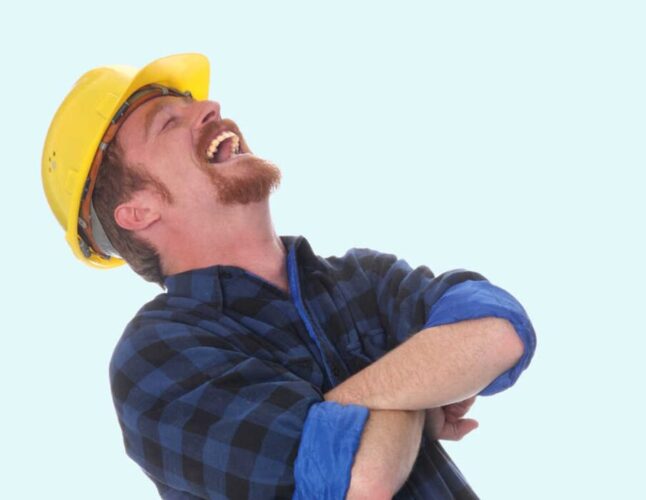
The Best Health and Safety Jokes (But Why Health and Safety Is No Laughing Matter)
Health and safety has become one of the most joked-about subjects in British workplaces.
From sarcastic comments about paperwork to exaggerated stories about “health and safety gone mad”, the topic regularly appears in site banter, office humour and social media memes.
And let’s be honest — some health and safety jokes are genuinely funny.
Most workers have heard the classic one-liners about ladders, hard hats, risk assessments or warning signs. Humour can help lighten the mood on busy construction sites, in warehouses or within office environments. In many workplaces, joking about safety has almost become part of the culture.
But behind every joke is an important reality: accidents at work are real, injuries can be life-changing, and poor safety standards can destroy businesses and lives. Every year, workers across the UK are seriously injured — or worse — because proper procedures were ignored, hazards were underestimated or safety systems failed.
That’s why health and safety at work should never be dismissed as unnecessary paperwork or over-the-top rules. Good safety management protects people, businesses and reputations. Proper health and safety training, professional guidance and effective workplace procedures save lives every single day.
So, while we’re sharing some of the best workplace safety jokes around, we’re also exploring the very real lessons behind them — and why investing in professional health and safety consultancy services is one of the smartest decisions any organisation can make.
“I told my boss I tripped over a toolbox… he said it was a slip-up.”
This is classic workplace humour — quick, simple and painfully cheesy. But despite the joke, slips, trips and falls are one of the most common causes of workplace injuries across the UK.
In construction, warehouses, offices and industrial environments, something as small as a loose cable, an uneven floor surface or badly stored equipment can lead to serious injuries. Broken bones, head injuries, sprains and long-term musculoskeletal problems often result from hazards that could have been prevented through simple control measures.
One of the biggest issues is familiarity. Workers become so used to their surroundings that hazards are overlooked. A toolbox left in a walkway for “just a minute” quickly becomes a danger when people are busy, distracted or carrying materials.
This is why proper housekeeping is such a major part of effective health and safety management systems. Good housekeeping reduces unnecessary risks and creates safer, more organised workplaces.
A professional health and safety risk assessment helps businesses identify potential hazards before accidents happen. Risk assessments should never be treated as tick-box exercises. They are practical tools designed to protect workers and reduce incidents.
At SAMS, our experienced health and safety consultants work with businesses to create practical, site-specific safety systems that genuinely improve workplace safety rather than simply generating paperwork.
“Why did the worker bring a ladder to the bar? Because safety said he needed support.”
It sounds harmless enough, but working at height remains one of the most dangerous workplace activities in the UK.
Falls from ladders, scaffolding, roofs and access equipment continue to be one of the leading causes of serious workplace injuries and fatalities. In many cases, incidents happen because workers take shortcuts, use the wrong equipment or assume a task is too small to require proper planning.
This is where proper health and safety training courses become essential.
Under the Health and Safety at Work Act, employers have a legal duty to ensure that work at height is properly planned, supervised and carried out safely. Workers also have responsibilities to follow procedures, use equipment correctly and report unsafe conditions.
Unfortunately, many workplace accidents happen because experienced workers become overconfident. The phrase “I’ve done this a hundred times before” often appears in accident investigations. Familiarity can create complacency — and complacency creates risk.
Through professional health and safety courses online and in-person training, workers and supervisors gain a deeper understanding of why safety controls matter, how to assess risk properly and how to avoid dangerous shortcuts.
At SAMS, our health and safety training focuses on practical, real-world application — helping businesses create safer working environments while maintaining productivity and compliance.
“I asked if the site was dangerous. They said, ‘Only if you ignore all the signs.’”
This joke highlights something surprisingly important: communication saves lives.
Safety signage and health and safety posters are often ignored because workers see them every day. However, warning signs, hazard notices, PPE instructions and emergency information all serve critical functions within workplace safety systems.
A properly displayed health and safety poster helps reinforce key information quickly and clearly. Whether it’s identifying restricted areas, fire exits, hazardous substances or mandatory PPE zones, signage supports safer decision-making across the workplace.
However, signs alone are not enough.
Workers need proper understanding of the hazards behind the signs. A person may see a warning about hazardous substances or moving machinery, but without effective health and safety training, they may not fully appreciate the risks involved.
This is why businesses should combine visual communication with structured learning, toolbox talks and ongoing supervision. Effective health and safety consultancy helps organisations build safety cultures where communication is clear, consistent and actively supported by management.
“The safest employee in the company? The one still reading the risk assessment.”
Risk assessments are one of the biggest targets for workplace humour. Many people view them as endless paperwork designed to slow jobs down.
In reality, a proper health and safety risk assessment is one of the most valuable tools any business can have.
A good risk assessment identifies hazards, evaluates potential harm and outlines the control measures required to reduce risks to acceptable levels. This process allows businesses to prevent accidents rather than simply reacting to them afterwards.
Without proper assessments, workers may unknowingly expose themselves to serious hazards involving electricity, hazardous substances, moving machinery, manual handling, confined spaces or unsafe access routes.
Importantly, risk assessments are not only legal requirements under many health and safety regulations — they are also essential for protecting workers, clients, contractors and members of the public.
Professional health and safety consultants can help businesses create practical risk assessments that are easy to understand, relevant to actual work activities and fully compliant with UK legislation.
At SAMS, we help organisations develop clear, effective documentation that supports safer working without unnecessary complexity.
“We have a fantastic safety record… nobody writes anything down.”
This joke reflects a genuine problem within many workplaces: underreporting.
Some organisations avoid reporting near misses, hazards or minor injuries because they worry about inspections, blame, insurance implications or reputational damage. But ignoring problems rarely makes them disappear.
Near misses are often warning signs of larger failures within workplace systems. A worker who nearly falls from defective scaffolding today could suffer a fatal accident tomorrow if the issue remains unresolved.
Strong reporting systems are a vital part of any successful health and safety management system because they allow businesses to identify problems early, investigate root causes and improve procedures proactively.
A positive safety culture encourages workers to speak openly about hazards and concerns without fear of blame or criticism. Effective health and safety consultancy services help businesses create environments where reporting is viewed as a tool for improvement rather than punishment.
“Why did the employee wear all his PPE to bed? He wanted to sleep safely.”
PPE jokes are everywhere on construction sites — but Personal Protective Equipment exists because workplace hazards are real.
Hard hats, gloves, respiratory protection, safety boots, hearing protection and eye protection all play important roles in reducing workplace injuries and exposure to dangerous substances.
However, one of the biggest misconceptions in workplace safety is believing PPE alone solves every problem.
Good health and safety at work always follows a hierarchy of control. Wherever possible, risks should first be eliminated or reduced through safer systems of work, engineering controls or process improvements. PPE should be the final layer of protection — not the only one.
This is why proper health and safety training courses are so important.
Workers need to understand not only what PPE to wear, but also:
- Why it is required
- How it protects them
- Its limitations
- How to inspect and maintain it properly
Without training and understanding, PPE can easily be misused, damaged or ignored altogether.
Health and Safety Is More Than Rules and Paperwork
Many people still ask, “What is health and safety?”
In reality, health and safety is about protecting people from harm while creating safer, healthier and more efficient workplaces. It is not about making work difficult or stopping productivity. Good safety management actually improves business performance by reducing accidents, downtime, absenteeism and legal risk.
Strong health and safety policies help organisations create clear expectations, consistent procedures and safer working cultures. They also demonstrate commitment to employee wellbeing — something increasingly important for clients, contractors and employees alike.
Effective health and safety at work benefits everyone by:
- Preventing injuries and fatalities
- Reducing sickness and absence
- Improving morale and productivity
- Supporting legal compliance
- Reducing financial and reputational risk
- Creating safer, more organised workplaces
Whether through accredited health and safety courses online, internal training programmes or ongoing consultancy support, investing in workplace safety is an investment in people and business success.
Why Professional Health and Safety Support Matters
Managing workplace safety is increasingly complex. Businesses must navigate changing legislation, industry standards, documentation requirements and operational risks while maintaining productivity and profitability.
This is why many organisations choose to work with experienced health and safety consultants.
A professional health and safety consultant can provide expert guidance tailored specifically to your industry, activities and workplace risks. Rather than relying on generic templates, businesses receive practical support designed around their real operational needs.
At SAMS, our professional health and safety consultancy services support businesses across a wide range of industries.
We help organisations:
- Develop compliant health and safety policies
- Create effective management systems
- Conduct workplace inspections and audits
- Carry out detailed risk assessments
- Produce method statements and safety documentation
- Deliver accredited health and safety training courses
- Improve workplace safety culture and compliance
Whether you need support from a dedicated health and safety advisor, assistance achieving compliance or accredited health and safety qualifications for your workforce, SAMS provides practical, professional solutions that help protect your people and your business.
Invest in Safety Before It Becomes Serious
Health and safety jokes might raise a smile in the workplace, but accidents, injuries and fatalities are no laughing matter.
Behind every risk assessment, training course, safety sign and procedure is one simple goal: making sure people go home safely at the end of every working day.
Good health and safety training, professional consultancy and strong workplace systems help prevent incidents before they happen — protecting workers, businesses and reputations alike.
At SAMS, we help organisations create safer workplaces through expert consultancy, accredited training and practical support tailored to real-world operations.
Learn more about our Health & Safety Consultancy Services:
https://www.samsltd.co.uk/consultancy/health-safety-consultancy/
Whether you need a health and safety consultant, accredited health and safety qualifications, or support building a compliant health and safety management system, SAMS is here to help.
Contact us today