
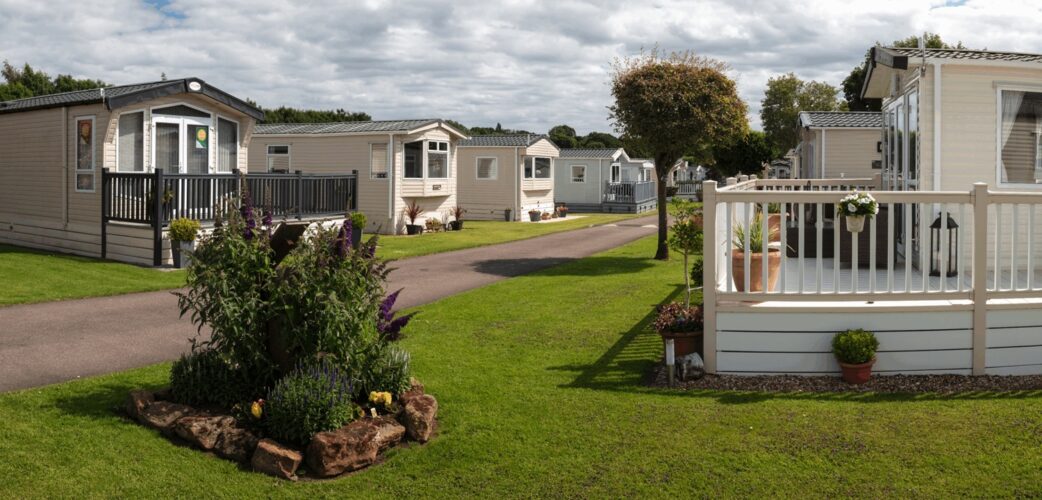
Holiday Caravan Park Fire Safety: What Owners and Operators Need to Know About Fire Risk Assessments
Running a holiday caravan park involves much more than providing comfortable accommodation and an enjoyable experience for guests.
Whether you manage a large holiday park, operate a small collection of static caravans or privately let a holiday lodge, you also have an important responsibility to protect the people staying in your accommodation.
Fire safety should be one of the most important considerations.
Holiday caravans and lodges present particular challenges because they combine sleeping accommodation, cooking facilities, electrical equipment, heating systems and, in many cases, gas appliances within a relatively compact space. Guests may also be unfamiliar with the layout, escape arrangements and emergency procedures, making effective fire prevention and early warning particularly important.
For owners and operators, understanding fire risk assessment requirements, maintaining appropriate safety precautions and regularly reviewing arrangements can help prevent unnecessary accidents, disruption, enforcement action and potentially serious consequences.
Under the Regulatory Reform (Fire Safety) Order 2005, commercial holiday accommodation in England and Wales is generally subject to fire safety duties, including the requirement to undertake a suitable and sufficient fire risk assessment.
At SAMS LTD, we provide professional Fire Risk Assessment Services to help businesses and organisations identify fire hazards, assess risks and understand the precautions needed to protect people and meet their legal responsibilities.
In this article, we explore the fire safety considerations facing holiday caravan parks, the relevant UK legislation, common hazards, practical precautions and why regular fire risk assessments should form an essential part of responsible holiday accommodation management.
Why Is Fire Safety So Important for Holiday Caravan Parks?
Holiday caravan parks are designed to provide relaxing environments where families, couples and individuals can enjoy time away from home. However, the very nature of holiday accommodation introduces fire safety considerations that owners and operators must manage.
Unlike employees working in a familiar workplace, holidaymakers may be staying somewhere for the first time. They may not know where alternative exits are located, how windows open, what to do if an alarm sounds or where to assemble after evacuating.
This becomes particularly important at night, when guests are asleep and may have less time to recognise and respond to a developing fire.
Holiday accommodation can also be occupied by people of different ages and abilities, including young children, older guests and individuals with disabilities or reduced mobility. Their ability to respond to an emergency and escape safely must be considered.
Furthermore, fire safety concerns extend beyond the interior of the caravan itself.
External decking, outdoor cooking equipment, parked vehicles, waste storage, neighbouring accommodation and the arrangement of access roads can all influence how a fire develops and how effectively emergency services can respond.
A comprehensive fire safety risk assessment helps owners and operators identify these issues and determine appropriate precautions before something goes wrong.
The objective isn’t to introduce unnecessary restrictions or make holiday accommodation difficult to operate. It is to create a safe environment where guests can enjoy their stay and operators can demonstrate that foreseeable fire risks have been properly considered.
What Are the UK Fire Safety Laws for Holiday Caravan Parks?
Understanding the legislation that applies to holiday accommodation is essential for anyone responsible for operating or letting static caravans and holiday lodges.
The legal requirements can vary depending on where the accommodation is located, how it is used and who is responsible for managing it.
Regulatory Reform (Fire Safety) Order 2005
In England and Wales, the Regulatory Reform (Fire Safety) Order 2005, as amended, is the principal legislation governing fire safety in most non-domestic premises, including accommodation provided to paying guests.
The legislation requires the responsible person to assess the risks from fire and implement appropriate fire safety measures.
For holiday caravan accommodation, this generally means considering how a fire could start, who might be affected, how occupants would receive warning and whether they could escape safely.
The responsible person must also ensure that relevant fire safety measures are maintained and that the assessment remains suitable and up to date.
The Fire Safety (England) Regulations 2022 introduce additional requirements for certain residential buildings, but these should not automatically be treated as applying to every holiday caravan. The precise legal framework depends on the premises.
Fire Safety Act 2021 and Building Safety Act 2022
The Fire Safety Act 2021 and Building Safety Act 2022 have also contributed to changes in the wider fire safety framework.
In particular, amendments to the Fire Safety Order introduced by Section 156 of the Building Safety Act strengthened requirements relating to recording fire risk assessments, documenting fire safety arrangements and cooperation between responsible persons.
For holiday accommodation operators in England and Wales, this reinforces the importance of maintaining clear, accessible fire safety records and ensuring that responsibilities are properly understood.
Fire Safety Legislation in Scotland
Holiday caravan parks in Scotland are subject to a different legislative framework, principally the Fire (Scotland) Act 2005, as amended, and the Fire Safety (Scotland) Regulations 2006.
Operators must ensure that appropriate fire safety arrangements are in place and that the risks to people using their premises are properly considered.
Because the legal framework differs across the UK, owners and operators should ensure that any advice or fire risk assessment services they obtain are appropriate to the jurisdiction in which their accommodation is located.
Caravan Site Licensing and Local Authority Requirements
Fire safety legislation isn’t the only legal consideration.
Holiday caravan parks may also be subject to site licensing requirements under legislation such as the Caravan Sites and Control of Development Act 1960, alongside applicable local authority conditions.
These can affect matters such as the positioning and separation of caravans, emergency access, firefighting arrangements and the management of communal areas.
Operators should check their individual site licence rather than assuming that the arrangements at another holiday park will automatically be appropriate.
Importantly, complying with site licensing conditions does not remove the need to comply with applicable fire safety legislation.
Who Is Responsible for Fire Safety in a Holiday Caravan Park?
Responsibility for fire safety depends on the ownership, management and letting arrangements.
In some cases, a holiday park operator owns and manages all accommodation. In others, individual caravans may be privately owned but rented through the park’s booking system. There may also be independently managed accommodation within a larger holiday park.
Under the Fire Safety Order, the responsible person will generally be the employer, where the premises are a workplace, or the person who has control of the premises in connection with a business or other undertaking.
This can mean that responsibilities are shared between different parties, depending on the circumstances.
For example, a park operator may manage the wider site, access roads and communal facilities, while an individual accommodation owner or letting agent may have responsibilities relating to the caravan being rented to guests.
Where more than one party has fire safety duties, appropriate cooperation and coordination are essential.
It should be clear who is responsible for arranging the fire risk assessment, checking alarms, maintaining equipment, arranging gas and electrical inspections, providing guest information and addressing identified defects.
Simply assuming that somebody else is taking care of fire safety can create significant gaps.
Even when a professional fire risk assessment company is appointed, the responsible person retains their legal duties and must act on the assessment’s findings.
Does Every Holiday Caravan Need a Fire Risk Assessment?
Where a static caravan or holiday lodge is commercially let to paying guests, it will generally fall within the scope of applicable fire safety legislation.
However, the way the assessment is organised should reflect the nature and complexity of the accommodation.
A holiday park containing several identical caravans under the same management may be able to use a suitably detailed assessment covering a particular accommodation type, provided relevant differences have been considered and there are appropriate arrangements for checking individual units.
Where caravans have substantially different layouts, numbers of bedrooms, escape arrangements, alarm systems or other relevant features, additional or separate assessments may be necessary.
The wider holiday park may also require its own assessment addressing communal buildings, shared facilities and site-wide fire safety arrangements.
It is important to distinguish between commercially let holiday accommodation and caravans used solely as private dwellings, because the application of fire safety legislation differs.
A competent assessor can help determine the appropriate scope and structure of the assessment.
What Should a Holiday Caravan Fire Risk Assessment Include?
The fire risk assessment purpose is to identify foreseeable fire hazards, consider who could be harmed and determine whether existing precautions are sufficient.
An effective assessment should consider both the likelihood of a fire starting and the potential consequences for people if one occurs.
Although every property is different, the main steps of fire risk assessment generally include:
-
Identify fire hazards: Consider potential ignition sources, combustible materials and the circumstances in which a fire could develop.
-
Identify people at risk: Consider guests, staff, contractors and anyone who may need additional assistance.
-
Evaluate the risks: Examine existing precautions, identify shortcomings and decide what further measures are necessary.
-
Record findings and take action: Document the assessment and ensure improvements are prioritised and implemented.
-
Review the assessment: Reconsider fire safety arrangements regularly and whenever significant changes occur.
For holiday accommodation, the assessment should examine practical issues such as cooking facilities, electrical systems, gas appliances, heating, smoke detection, escape arrangements, external fire hazards and the information provided to guests.
A professional fire risk assessment report should give the responsible person a clear understanding of significant risks and the actions required to address them.
The assessment should be proportionate to the premises rather than relying on a generic checklist that overlooks the characteristics of the accommodation.
1. Electrical Safety in Holiday Caravans
Electrical installations and appliances are important considerations when assessing fire risks in holiday accommodation.
Static caravans commonly contain refrigerators, televisions, kettles, microwaves, cookers, heaters and other electrical equipment. Some also have washing machines, tumble dryers and additional appliances.
Faulty wiring, damaged plugs, overloaded sockets, unsuitable extension leads and poorly maintained equipment can all increase the risk of fire.
Operators should arrange appropriate inspection and testing of fixed electrical installations by competent professionals, with intervals determined by applicable requirements, the installation and its circumstances. Appliances should also be inspected and maintained as appropriate to their use and condition.
Particular attention should be paid to accommodation that has been moved, modified or refurbished, as electrical arrangements may have changed.
Routine housekeeping checks can help identify damaged cables, loose fittings or other obvious defects before the next guests arrive.
The fire risk assessment should consider whether electrical safety arrangements are adequate and whether identified defects are being corrected promptly.
2. Gas Appliances, Heating and Carbon Monoxide Safety
Many holiday caravans use gas appliances for cooking, heating and hot water.
These systems need to be correctly installed, inspected and maintained because defects can create fire, explosion and carbon monoxide risks.
Where gas appliances are provided in commercially let holiday accommodation, the relevant duties under the Gas Safety (Installation and Use) Regulations 1998 must be considered. Landlords generally need to arrange annual gas safety checks by a suitably qualified Gas Safe registered engineer.
Operators should also make sure that any reported appliance defects are investigated and that unsafe equipment is taken out of use until appropriate repairs have been completed.
Portable heaters can introduce additional hazards, particularly where they are positioned close to bedding, curtains, furniture or other combustible materials.
Guest rules should make clear whether personal heating equipment is permitted and what restrictions apply.
Carbon monoxide detection must also be considered under the applicable legal requirements. Although carbon monoxide poisoning is a separate hazard from fire, it is an essential part of managing the risks associated with fuel-burning appliances.
A fire safety risk assessment should consider the interaction between heating arrangements, ignition sources, combustible materials and the ability of guests to respond safely to an emergency.
3. Cooking Facilities and Kitchen Fire Hazards
Cooking is a normal part of self-catering holidays, but it introduces an obvious potential source of ignition.
Unattended cooking, overheated oil, combustible items left near hobs and misuse of appliances can all contribute to fires.
The compact design of some holiday caravans makes good kitchen housekeeping especially important.
Owners and operators should consider the position of cooking equipment, the materials surrounding it, the condition of appliances and the availability of suitable fire precautions.
Clear, practical instructions can help guests understand how to use unfamiliar cooking equipment safely.
Where firefighting equipment is provided, its type, positioning and maintenance should be appropriate to the risks identified.
However, guests should not be encouraged to put themselves at risk attempting to extinguish a fire.
Immediate evacuation and calling the emergency services must remain the priority.
4. Smoke Alarms, Heat Detection and Early Warning
Early warning is particularly important in accommodation where people may be sleeping.
A fire that develops during the night can create dangerous conditions before occupants become aware of what is happening.
Appropriate smoke and heat detection should therefore be a central consideration within a holiday caravan fire risk assessment.
The number, type and location of alarms should reflect the accommodation’s layout, the position of bedrooms and the potential for a fire to develop in different areas.
In some circumstances, interconnected alarms may be appropriate so that activation of one device causes other alarms to sound.
Operators must also consider whether alarms will provide effective warning to guests who are deaf or hard of hearing, where relevant.
Installing alarms is only the beginning.
They must be properly maintained, tested at appropriate intervals and replaced when necessary.
A documented checking procedure helps ensure that alarms remain operational rather than simply assuming they are working because they were installed several years ago.
5. Escape Routes, Doors and Windows
One of the most important questions in any fire and safety risk assessment is whether occupants can escape quickly and safely if a fire occurs.
Holiday caravans often have relatively simple internal layouts, but that doesn’t mean escape arrangements should be taken for granted.
Operators should consider whether main exit doors can be opened easily, whether alternative escape windows are accessible and whether furniture or stored belongings could obstruct escape.
Guests should not need to search for a key or work out a complicated locking mechanism during an emergency.
Escape arrangements also need to consider the people likely to occupy the accommodation.
An escape window that might be manageable for an able-bodied adult may not be suitable for a young child, an older person or somebody with reduced mobility.
Where guests have additional accessibility requirements, the suitability of the accommodation and its escape arrangements should be considered carefully.
The objective is to ensure that occupants have a realistic means of reaching safety, not merely that an exit exists on a floor plan.
6. Outdoor Barbecues, Fire Pits and Decking
Fire safety responsibilities don’t end at the caravan door.
Outdoor cooking equipment, barbecues, fire pits and timber decking can introduce additional fire hazards, particularly during busy summer periods.
Guests may not appreciate how long charcoal and barbecue ash can remain hot after cooking has finished.
Placing hot coals in unsuitable containers or leaving them near combustible materials can create a fire risk long after the barbecue appears to have been extinguished.
Operators should establish clear rules covering where outdoor cooking equipment may be used, how far it must be positioned from accommodation and decking, and how ash and other hot materials should be disposed of safely.
Where barbecues or fire pits are prohibited in particular locations, those restrictions should be communicated clearly to guests.
A holiday park fire risk assessment should consider the proximity of external ignition sources to accommodation, combustible decking and neighbouring units.
7. Fire Separation, Caravan Spacing and Emergency Access
The arrangement of accommodation across a holiday park can influence how fire spreads and how effectively emergency services can respond.
If caravans are positioned too close together, a fire involving one unit could potentially expose neighbouring accommodation to heat and flames.
Site licence conditions may establish minimum separation distances and other requirements affecting the layout of the park.
Operators should ensure that these conditions are understood and maintained.
Additional structures, extensions, decking, storage units and parked vehicles can sometimes alter the practical separation between accommodation units or affect access.
Emergency vehicles must also be able to reach appropriate areas of the site.
Access roads, turning arrangements, parked vehicles, gates and barriers should therefore be considered as part of wider site fire safety planning.
The fire risk assessment system should take account of both individual accommodation risks and relevant site-wide arrangements.
8. Waste Storage, Combustible Materials and Housekeeping
Good housekeeping is one of the simplest ways to reduce avoidable fire risks.
Holiday parks can accumulate combustible materials through waste storage, maintenance activities, packaging, outdoor furniture and general storage.
Bins positioned close to caravans, rubbish stored beneath accommodation and combustible materials placed near windows or exits can increase the potential consequences of an external fire.
Operators should establish appropriate arrangements for waste collection, storage and disposal.
Maintenance teams should also be aware of the importance of keeping areas around accommodation clear and identifying unsuitable storage practices.
Vegetation and landscaping may need attention where they create additional fire hazards or interfere with access.
Regular inspections help ensure that conditions remain appropriate throughout the holiday season.
9. Providing Clear Fire Safety Information to Guests
Guests cannot be expected to understand the emergency arrangements at an unfamiliar holiday park unless the relevant information has been communicated to them.
Clear instructions should explain what to do if a fire is discovered, how to raise the alarm, how to evacuate and how to contact the emergency services.
Information may also need to identify alternative escape arrangements, relevant restrictions on smoking or outdoor cooking and the location of any designated assembly points.
Depending on the accommodation and site, this information could be provided through welcome packs, digital guest guides, notices or information displayed within the caravan.
Instructions should be straightforward and easy to understand.
A lengthy document containing complicated technical language is unlikely to be useful to somebody responding to an emergency.
For smaller or more remote holiday parks, it may also be particularly important to provide the correct address, postcode and location information so guests can explain where assistance is needed.
10. Staff Training and Fire Safety Responsibilities
Even when the holiday accommodation itself is relatively simple, staff have an important role in maintaining fire safety standards.
Housekeeping teams may be responsible for checking alarms and escape routes between bookings. Maintenance staff may identify damaged equipment or unsafe electrical installations. Reception staff may need to explain emergency arrangements or respond to reports from guests.
These responsibilities should be clearly defined.
Employees should receive appropriate information and instruction so they understand what to check, how to report defects and when an issue requires immediate attention.
For example, a housekeeper who discovers that an escape window cannot be opened should know that this is a safety concern requiring action before the accommodation is occupied again.
Similarly, staff should understand the importance of reporting defective smoke alarms, damaged electrical equipment or evidence of unsafe outdoor cooking.
Effective training and communication can help turn the findings of a fire risk assessment report into practical, everyday safety arrangements.
11. How Often Should a Holiday Caravan Fire Risk Assessment Be Reviewed?
One of the most common questions from holiday accommodation owners concerns fire risk assessment frequency.
There is no universal legal requirement under the Fire Safety Order to replace every fire risk assessment automatically after 12 months. Instead, the assessment must be kept under review and updated when necessary.
For holiday caravan parks, an annual fire risk assessment review is a sensible approach to consider, particularly before the start of a new holiday season.
However, reviewing an assessment does not always mean carrying out an entirely new assessment from the beginning.
The important consideration is whether the existing assessment remains accurate and whether the precautions identified are still appropriate.
A review may be necessary following significant changes such as the installation of new heating equipment, alterations to accommodation layouts, changes to escape arrangements, the introduction of new decking or changes in occupancy arrangements.
A fire, near miss or discovery of previously unidentified hazards should also prompt consideration of whether the assessment needs updating.
Regular reviews help ensure that fire safety arrangements develop alongside the accommodation rather than becoming outdated.
12. Why Routine Fire Safety Checks Matter Between Guest Bookings
A professional fire risk assessment establishes what precautions are required, but those precautions must continue working throughout the holiday season.
Holiday caravan accommodation experiences frequent changes of occupants, and each changeover presents an opportunity to identify potential problems.
Guests may have moved furniture, damaged equipment, interfered with alarms or left combustible materials in unsuitable locations.
Housekeeping and maintenance staff can help identify these problems before new guests arrive.
A practical changeover procedure should consider whether escape doors and windows operate correctly, smoke and heat alarms are functioning, firefighting equipment remains in place and obvious hazards have been addressed.
The frequency and detail of these checks should reflect the accommodation, the risks identified and the applicable maintenance requirements.
Recording completed checks also helps operators demonstrate that their safety arrangements are being actively maintained.
For larger parks, digital inspection records can make it easier to monitor individual units and identify recurring problems.
13. Common Fire Safety Mistakes Holiday Caravan Park Operators Should Avoid
Many fire safety problems don’t arise because an operator has deliberately ignored their responsibilities. They develop because arrangements haven’t been reviewed, responsibilities are unclear or everyday checks are overlooked.
Common mistakes include assuming that a caravan is safe because it is relatively new, relying entirely on the manufacturer’s original safety features or believing that a previous assessment remains valid regardless of subsequent alterations.
Other potential problems include failing to check alarms between bookings, allowing escape windows to become obstructed, overlooking external combustible storage and not communicating fire procedures to guests.
One particularly important mistake is assuming that obtaining a fire risk assessment report automatically means every requirement has been satisfied.
An assessment may identify actions that still need to be completed.
The responsible person must ensure that necessary improvements are implemented and that suitable fire precautions are maintained.
This is why choosing professional fire risk assessment providers who deliver clear, practical recommendations can be valuable.
14. What Could Happen If Holiday Accommodation Fire Safety Is Neglected?
Failure to manage fire safety can have consequences for guests, employees, the accommodation itself and the wider business.
The most serious risk is injury or loss of life.
However, even where nobody is injured, a fire can cause substantial damage, interrupt bookings, affect neighbouring accommodation and create significant disruption for a holiday park.
Where operators fail to comply with applicable fire safety legislation, enforcement authorities may take action. Depending on the circumstances and severity of the failings, this can include enforcement notices, restrictions on the use of premises, prosecution and financial penalties.
Insurance issues may also arise where relevant policy conditions have not been met, although the consequences will depend on the individual policy and circumstances.
There is also the potential reputational damage associated with a serious incident.
Guests reasonably expect holiday accommodation to be safe. Discovering that basic fire precautions have been neglected can undermine confidence in an operator.
A suitable fire risk assessment, supported by effective maintenance, staff training and appropriate records, helps reduce avoidable risks and demonstrates a more responsible approach to managing accommodation.
15. Why Choose a Professional Fire Risk Assessment Company?
Some straightforward premises may be assessed by someone within the organisation who has sufficient competence to do so.
However, the person undertaking the assessment must be capable of identifying the relevant hazards, evaluating the risks and determining appropriate precautions.
Holiday caravan parks can introduce additional considerations because of sleeping accommodation, different caravan layouts, shared facilities, outdoor fire hazards and potentially overlapping responsibilities.
Using a competent professional can help operators understand these issues and establish a proportionate approach.
When comparing fire risk assessment companies, owners and operators should consider the assessor’s qualifications, relevant experience and ability to assess the particular type of accommodation.
A professional fire risk assessment report should explain significant findings clearly and identify the actions needed to address deficiencies.
It should also distinguish between essential precautions and recommendations that may be beneficial but are not necessarily required in every property.
The aim should be to provide practical fire safety advice that protects people without imposing unnecessary measures that aren’t justified by the risk.
16. Fire Risk Assessment Checklist for Holiday Caravan Parks
Although a checklist cannot replace a suitable and sufficient assessment, it can help owners and operators identify subjects that deserve attention.
The following fire safety risk assessment checklist provides a useful starting point for considering the arrangements at holiday accommodation.
The precise requirements will depend on the accommodation, its layout, occupancy, location and applicable legislation.
A checklist is most useful when it forms part of an ongoing inspection and maintenance programme rather than being treated as a substitute for a professional assessment.
17. How SAMS LTD Can Help with Holiday Caravan Park Fire Risk Assessments
At SAMS LTD, we understand that fire safety needs to be practical, proportionate and appropriate to the premises being assessed.
Our experienced team provides professional fire risk assessment services in Kent, London and the South East, helping businesses, organisations and holiday accommodation owners understand their responsibilities and identify potential risks.
Our fire risk assessors have almost 40 years of combined experience, with assessors holding NEBOSH Fire and Fire Protection Association qualifications.
When undertaking a fire safety assessment, our approach involves identifying significant hazards, considering who may be at risk, evaluating existing precautions and providing practical recommendations where improvements are necessary.
For holiday accommodation, this can involve considering sleeping risks, escape arrangements, fire detection, electrical and heating hazards, management procedures and the measures needed to protect guests.
We understand that different premises require different approaches. A small number of privately let static caravans will not necessarily have the same fire safety arrangements as a large holiday park with numerous accommodation types and communal facilities.
Our aim is to provide clear, relevant advice that helps responsible persons understand what action is necessary.
Following the assessment, clients receive a fire risk assessment report identifying significant findings and recommended improvements, helping them prioritise action and maintain appropriate fire safety arrangements.
For owners and operators searching for a fire risk assessment company in Kent, SAMS provides professional support backed by practical fire safety experience.
Find out more about our Fire Risk Assessment Services or our dedicated Holiday Let Fire Risk Assessments.
18. Book Your Holiday Caravan Park Fire Risk Assessment with SAMS LTD
Whether you operate a holiday caravan park, manage several static caravans or privately let a holiday lodge, fire safety should be a fundamental part of your responsibilities.
A suitable fire risk assessment helps you understand the hazards associated with your accommodation, evaluate the precautions already in place and identify improvements that may be necessary to protect guests.
It can also help you avoid unnecessary problems associated with overlooked maintenance, unclear responsibilities, outdated assessments and inadequate emergency arrangements.
At SAMS, our experienced fire safety team can help you understand your fire risk assessment requirements and take a practical approach to managing fire safety.
Contact SAMS LTD today to discuss your holiday caravan park or holiday accommodation fire safety requirements and request a quotation.
Visit our Fire Risk Assessments page, email info@samsltd.co.uk or call 01843 821406.
Holiday caravan parks provide opportunities for families and visitors to relax, explore and enjoy time away from home. However, behind every enjoyable holiday experience should be effective safety arrangements that protect guests and staff.
Fire prevention, reliable detection, suitable escape routes, competent maintenance and clear emergency procedures all contribute towards a safer environment.
The most effective approach is to consider these matters before an incident occurs rather than waiting until something goes wrong.
A professional fire risk assessment is an important part of that process, but it should also be supported by regular checks, appropriate maintenance and a commitment to reviewing fire safety as circumstances change.
For holiday accommodation owners and operators in Kent, London and the surrounding areas, SAMS LTD can help you take a proactive approach to fire safety, protect your guests and better understand your legal responsibilities.