
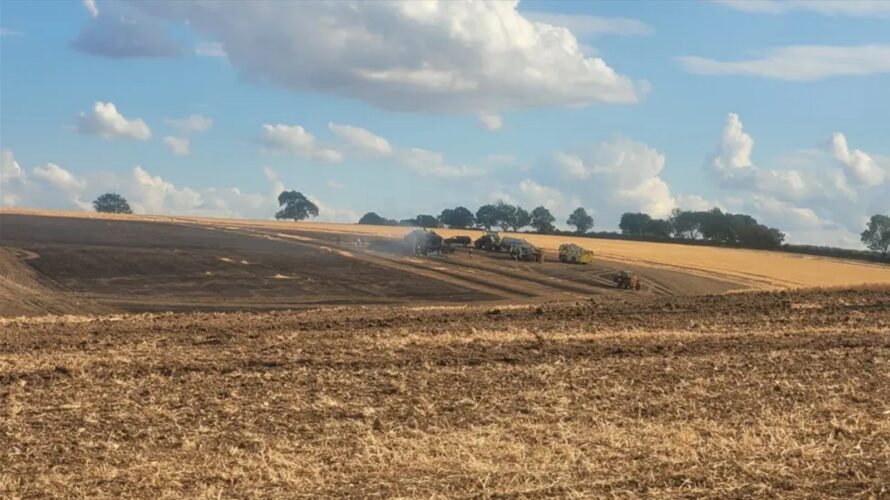
UK Government Wildfire Emergency Alert: Why Fire Safety and Fire Risk Assessments Matter
On Friday 14 August 2026, millions of mobile phones across England and Wales received an unusual and important message: a UK Government Emergency Alert warning of a serious national risk of wildfires.
The alert followed an extraordinary period of hot, dry weather and significant wildfire activity. By that point in 2026, more than 1,000 wildfires had already been recorded in England and Wales, surpassing the previous annual record. The Government urged people not to light barbecues, campfires, fireworks or other outdoor fires because of the danger of a small ignition developing rapidly into a serious incident.
For businesses, property owners and those responsible for workplaces, the warning also provided a timely reminder of a broader principle: fire risks can change, sometimes very quickly.
A fire risk assessment should therefore never be treated as paperwork that’s completed once and forgotten. Buildings change, activities change, people change and external conditions can change too.
At SAMS LTD, our professional Fire Risk Assessment services help businesses across Kent, London and the South East identify fire hazards, evaluate existing precautions and establish practical measures to protect employees, visitors, contractors and premises.
What Was the UK Government Emergency Alert?
The Emergency Alert issued on 14 August warned people across England and Wales that there was a serious risk of wildfires nationally.
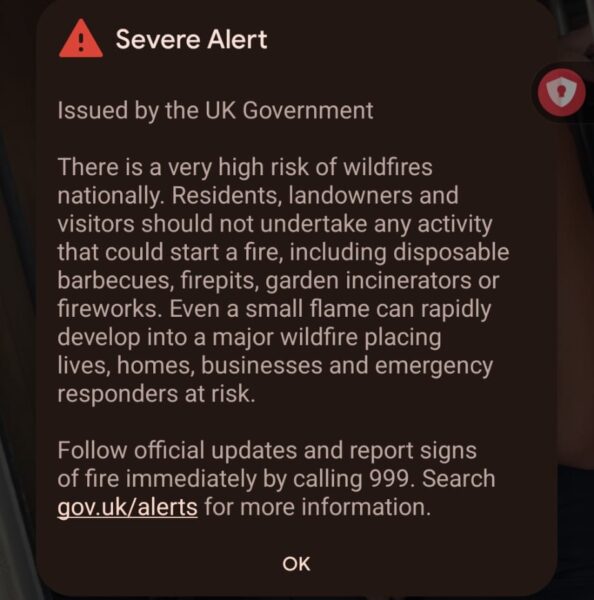
Emergency Alerts are designed to deliver urgent safety information directly to compatible mobile phones when there is a risk to life. In this instance, the scale of the wildfire threat resulted in the largest use of the UK’s Emergency Alerts system to date.
The public was specifically urged to avoid activities that could create an ignition source, including barbecues, campfires and fireworks, and to contact the emergency services if they discovered a fire.
It wasn’t simply a precautionary message about warm summer weather.
Firefighters were already dealing with numerous significant incidents. On 13 August, temperatures had reached 38.1°C at Kew Gardens, while serious fires affected areas including the West Midlands. A major grass fire at Stourbridge spread into residential areas, demonstrating how quickly an outdoor fire can threaten homes, businesses and communities.
Why Was the Severe Alert Issued?
The combination of extreme temperatures, prolonged dry conditions and parched vegetation had created conditions in which fires could ignite and spread extremely quickly.
By 14 August, England and Wales had already experienced a record-breaking number of wildfires during 2026.
Dry grass, vegetation and other combustible materials can effectively provide fuel for fire. Add an ignition source, oxygen and suitable weather conditions, and a seemingly minor incident can become much more difficult to contain.
The Government alert therefore focused heavily on prevention.
Avoiding unnecessary ignition sources was particularly important because emergency services were already responding to multiple incidents. The warning was essentially asking millions of people to recognise that their individual actions could either reduce or increase an already significant national fire risk.
This principle is also at the heart of a professional fire safety risk assessment: identify how a fire could start, consider the fuel that could allow it to develop, identify who could be harmed and put appropriate precautions in place before an emergency occurs.
Why Was the Alert So Important?
The events surrounding the warning demonstrated something every business should understand about fire safety: conditions can escalate rapidly.
Wildfires are particularly effective at illustrating this because people can physically see fire moving from vegetation towards properties. But the underlying principles also apply inside workplaces.
A relatively small ignition source can become significantly more dangerous when combined with combustible materials, inadequate housekeeping, unsuitable storage, ineffective compartmentation or insufficient fire precautions.
That’s why effective fire risk assessments don’t focus solely on whether a fire is likely to start.
They also consider what could happen if it does.
How could the fire spread? Who would be at risk? Would people receive sufficient warning? Could everyone evacuate safely? Are escape routes protected? Are fire doors functioning correctly? Is suitable fire-fighting equipment available? Do employees understand what they’re expected to do?
These are exactly the types of questions organisations need to answer before an emergency happens.
What Does the Wildfire Warning Teach Businesses About Fire Risk?
The national alert might have concerned wildfires, but there are valuable lessons for virtually every workplace.
Perhaps the biggest is that fire risk isn’t static.
A workplace that was appropriately managed several years ago may have changed considerably since its last assessment.
Businesses introduce new equipment. Offices are reorganised. Storage increases. Buildings are refurbished. Staff numbers change. Escape routes are altered. Contractors carry out work. Different materials are introduced.
External circumstances can also influence risk.
Periods of unusually hot and dry weather, for example, can increase risks associated with external waste storage, vegetation, smoking areas, outdoor activities and combustible materials located close to buildings.
A good fire risk assessment system recognises these changes and ensures precautions remain appropriate.
What Is a Fire Risk Assessment?
If you’ve ever searched “what is a fire risk assessment?”, the basic principle is straightforward.
A fire risk assessment is a structured examination of your premises, the potential fire hazards within them, the people who could be affected and the measures currently in place to prevent fires and protect people if one occurs.
The fire risk assessment purpose is both preventative and protective.
- Firstly, it aims to reduce the likelihood of a fire starting.
- Secondly, it considers how people will be protected if prevention measures fail and a fire does occur.
Under the Regulatory Reform (Fire Safety) Order 2005, a suitable and sufficient fire safety risk assessment is a core requirement for most non-domestic premises in England and Wales.
Depending on the premises, responsibilities can apply to employers, business owners, landlords, people controlling premises and other designated responsible persons.
What Are the Main Steps of a Fire Risk Assessment?
Although every property is different, the fundamental steps of fire risk assessment involve identifying hazards, identifying people at risk, evaluating existing controls, recording findings and maintaining appropriate arrangements.
Identifying Potential Fire Hazards
A professional fire and safety risk assessment begins by considering how a fire could start and what could allow it to develop.
This means examining potential sources of ignition such as electrical equipment, heating systems, cooking equipment, smoking, machinery and hot works.
Potential fuels also need consideration, including packaging, waste, furniture, flammable liquids and combustible stock. Sources of oxygen or oxidising materials may also require assessment depending on the workplace.
The relationship between these factors matters.
Good fire safety isn’t simply about spotting an obvious hazard; it’s about understanding how hazards could combine to create a serious incident.
Identifying People at Risk
Next, a fire safety risk assessment considers who could be affected.
That naturally includes employees, but shouldn’t stop there.
Visitors, customers, contractors, temporary employees, lone workers, delivery drivers and members of the public may all need consideration.
Particular attention may also be necessary for anyone who could require additional assistance during an evacuation, including people with mobility, sensory or cognitive impairments.
A suitable assessment considers the people actually using the building rather than approaching fire safety as a generic box-ticking exercise.
Evaluating Existing Fire Safety Measures
Your assessor should then determine whether existing precautions are suitable and sufficient for the premises and how they’re being used.
At SAMS, this includes consideration of areas such as escape routes, fire doors and compartmentation, fire detection and warning systems, emergency lighting, fire-fighting equipment, housekeeping, electrical safety and fire safety management arrangements.
This effectively creates a premises-specific fire risk assessment checklist, rather than relying on a generic checklist downloaded from the internet.
Recording and Prioritising Improvements
Identifying a problem isn’t particularly useful unless you know what to do about it.
Where improvements are required, they should be proportionate, practical and prioritised according to risk.
A professional fire risk assessment report gives the responsible person a clear record of significant findings and recommended actions, helping the organisation understand what needs addressing and which actions should receive priority.
At SAMS, our recommendations are designed to be practical and cost-effective while supporting the organisation’s legal responsibilities.
When Should a Fire Risk Assessment Be Reviewed?
Another important lesson from rapidly changing wildfire conditions is the importance of fire risk assessment review.
There isn’t a universal rule saying every workplace assessment automatically becomes suitable for renewal on exactly the same date.
Instead, the assessment needs to remain suitable and sufficient.
Your fire risk assessment frequency and review arrangements should therefore take account of the premises, its activities, the risks involved and any significant changes.
A review may be particularly important following changes to the building, occupancy, working practices, equipment or fire safety arrangements, or where there is reason to believe the existing assessment is no longer valid.
SAMS describes a good assessment as part of a living fire risk assessment system that continues to be maintained and reviewed as the workplace changes.
Does Your Workplace Need to Consider External Fire Risks?
Fire safety doesn’t necessarily stop at your front door.
The events of August 2026 dramatically demonstrated how fires beginning outdoors can threaten buildings.
Businesses should therefore consider relevant external hazards as part of their overall approach to fire safety.
Depending on the premises, these could include combustible waste stored against buildings, smoking areas, external storage, vegetation, neighbouring activities and access requirements for the fire and rescue service.
A commercial fire risk assessment should reflect the actual circumstances surrounding the property.
For some businesses, the external environment may present little additional risk. For others, particularly sites with extensive grounds, industrial activities, storage areas or locations close to vegetation, it may warrant greater consideration.
Why Professional Fire Risk Assessments Matter
A generic fire safety risk assessment checklist can be useful for routine inspections, but it isn’t a substitute for competent assessment where professional expertise is required.
Every building has different characteristics.
A small office doesn’t have the same risks as a warehouse. A workshop differs from a hotel. A retail environment differs from a construction site.
Even two apparently similar offices can have different occupancy levels, layouts, escape routes, equipment and working arrangements.
That’s why choosing experienced fire risk assessment providers can be invaluable.
A competent assessor doesn’t simply identify whether an extinguisher is hanging on a wall. They consider the building as a complete system: how a fire could start, how it could spread, how people would become aware of it, how they would escape and whether the existing precautions are appropriate.
Fire Risk Assessments from SAMS LTD
At SAMS LTD, we’re proud to provide professional fire risk assessment services across Kent, London and the South East.
Our fire risk assessors have almost 40 years of combined experience, with assessors holding respected NEBOSH Fire and Fire Protection Association qualifications.
Whether you require an office fire risk assessment, commercial fire risk assessment or support reviewing existing fire safety arrangements, we’ll work around your organisation to minimise disruption.
Our assessment examines potential hazards, identifies the people who could be affected and reviews whether your existing precautions are suitable and sufficient.
Where improvements are required, we’ll provide practical recommendations designed around your premises and operations.
You’ll also receive a clear fire risk assessment report, helping you prioritise actions, demonstrate compliance and create a safer environment for everyone using your premises.
Looking for a Fire Risk Assessment in Kent?
If you’re searching for a fire risk assessment in Kent or an experienced fire risk assessment company in Kent, SAMS can provide the professional support you need.
Fire safety should never become something an organisation only thinks about after an incident.
The Government’s wildfire alert on 14 August 2026 was issued because the circumstances had created an exceptional risk and preventing new fires had become critically important. It provided a powerful reminder that fire prevention depends on recognising risks early and acting before an ignition becomes an emergency.
The same principle applies to every workplace.
A suitable fire risk assessment helps you understand your hazards before there’s a fire, identify weaknesses before they’re tested in an emergency and put appropriate precautions in place before someone’s safety depends upon them.
At SAMS LTD, our experienced team can help you understand your fire risk assessment requirements, review your existing arrangements and provide a comprehensive assessment tailored to your premises.
Don’t wait for a fire to reveal the weaknesses in your fire safety arrangements.
Contact us today and find out more about SAMS LTD Fire Risk Assessments in Kent, London and the South East and arrange your assessment today.