
Why Must You Be Clean Shaven for a Face Fit Test?
If your job requires you to wear respiratory protective equipment (RPE), you may have been told that you must be clean shaven before attending a face fit test. But why is this so important, and what happens if you have a beard, moustache or even a small amount of stubble?
For employees working in construction, manufacturing, engineering, demolition, maintenance and other industries where hazardous airborne substances may be present, wearing suitable respiratory protection is essential. However, even a high-quality respirator may fail to provide its intended level of protection if it doesn’t fit the wearer correctly.
Being clean shaven is particularly important when wearing tight-fitting respirators because facial hair can prevent the mask from forming an effective seal against the skin. Even a small gap can allow hazardous dust, fumes, fibres and other airborne contaminants to enter the mask, potentially putting the wearer’s health at risk.
At Safety & Management Solutions Ltd (SAMS LTD), we provide professional Face Fit Testing in Kent and across the South East, helping employers ensure their workers have correctly fitting respiratory protective equipment.
Our Respiratory Qualitative Face Fit Testing service is delivered by Fit2Fit-accredited face fit testers, providing businesses with access to competent testing that supports their workplace health and safety responsibilities.
Whether you are a construction company in Canterbury, a manufacturing business in Maidstone, a contractor in Medway or an employer elsewhere in Kent and the South East, arranging professional face fit testing can be an important part of protecting your workforce.
In this guide, we explain why facial hair matters, what happens during a face fit test, how to prepare for testing and how SAMS LTD can help businesses arrange professional qualitative face fit testing in Kent and the South East.
Why Is Being Clean Shaven Important for a Face Fit Test?
A face fit test is designed to establish whether a particular make, model and size of tight-fitting respirator provides an adequate fit for the individual wearing it.
Respiratory protective equipment such as disposable FFP3 masks and reusable half-mask respirators relies on a close seal between the mask and the wearer’s face. This seal helps prevent contaminated air from entering around the edges of the respirator rather than passing through its filters.
When facial hair sits between the sealing surface and the skin, it can create small gaps that compromise this protection.
These gaps may be difficult to see, but they can allow airborne contaminants to bypass the filtration system.
This is particularly concerning in workplaces where employees may be exposed to hazardous substances such as:
- Silica dust: Generated when cutting, drilling or grinding concrete, stone, bricks and other silica-containing materials.
- Wood dust: Produced during woodworking, sanding, cutting and manufacturing activities.
- Asbestos fibres: Potentially released when asbestos-containing materials are disturbed.
- Construction dust: Generated during demolition, refurbishment, chasing, drilling and other building activities.
- Metal fumes and particles: Associated with certain welding, grinding and fabrication processes.
- Other hazardous airborne substances: Encountered during industrial, maintenance and manufacturing operations.
The Health and Safety Executive (HSE) advises that workers using tight-fitting respiratory protective equipment must be clean shaven wherever the mask’s sealing surface contacts their face.
In simple terms, a respirator can only provide its intended protection if it fits correctly and is worn properly.
A successful face fit test helps establish whether the selected mask is suitable for the individual under the conditions assessed. However, workers must continue to wear the respirator correctly and carry out a pre-use seal check every time it is fitted.
For employers arranging Face Fit Testing in Kent, this makes choosing suitable respiratory protection and ensuring employees are properly prepared essential parts of the process.
Find out more about our professional Qualitative Face Fit Testing Services.
Can You Have Stubble During a Face Fit Test?
One of the most common questions employees ask before attending a face fit test is whether a small amount of stubble is acceptable.
The answer is that workers must be clean shaven wherever the tight-fitting respirator seals against the face.
Even short facial hair can interfere with the seal. Although a small amount of stubble may seem insignificant, it can create tiny channels through which contaminated air can pass.
Facial hair that may affect the fit includes:
Stubble: Even short hair growth can prevent the mask from sealing directly against the skin.
Beards: A beard that extends beneath the respirator’s sealing surface can compromise its effectiveness.
Moustaches: A moustache may be acceptable if it remains completely outside the sealing area, but hair that interferes with the seal can affect the fit.
Sideburns: Long sideburns extending into the sealing area can prevent a secure fit.
Other facial hair: Any facial hair positioned between the mask and the skin where the seal is formed may affect respiratory protection.
The important consideration isn’t simply whether somebody has a beard or moustache. It is whether facial hair interferes with the sealing surface of the particular respirator being worn.
For employees attending a face fit test, the safest preparation is to ensure that the relevant sealing area is clean shaven on the day of testing.
HSE guidance recommends that wearers should have been clean shaven in the seal area within the preceding eight hours.
For businesses arranging on-site face fit testing across Kent and the South East, communicating this requirement to employees beforehand can help avoid unnecessary delays, unsuccessful appointments and the need to rearrange testing.
If an employee cannot or does not wish to shave, the employer should consider whether alternative respiratory protective equipment would be suitable for the work.
What Happens If You Fail a Face Fit Test Because of Facial Hair?
If facial hair prevents a respirator from forming an effective seal, the wearer may be unable to achieve a successful face fit test.
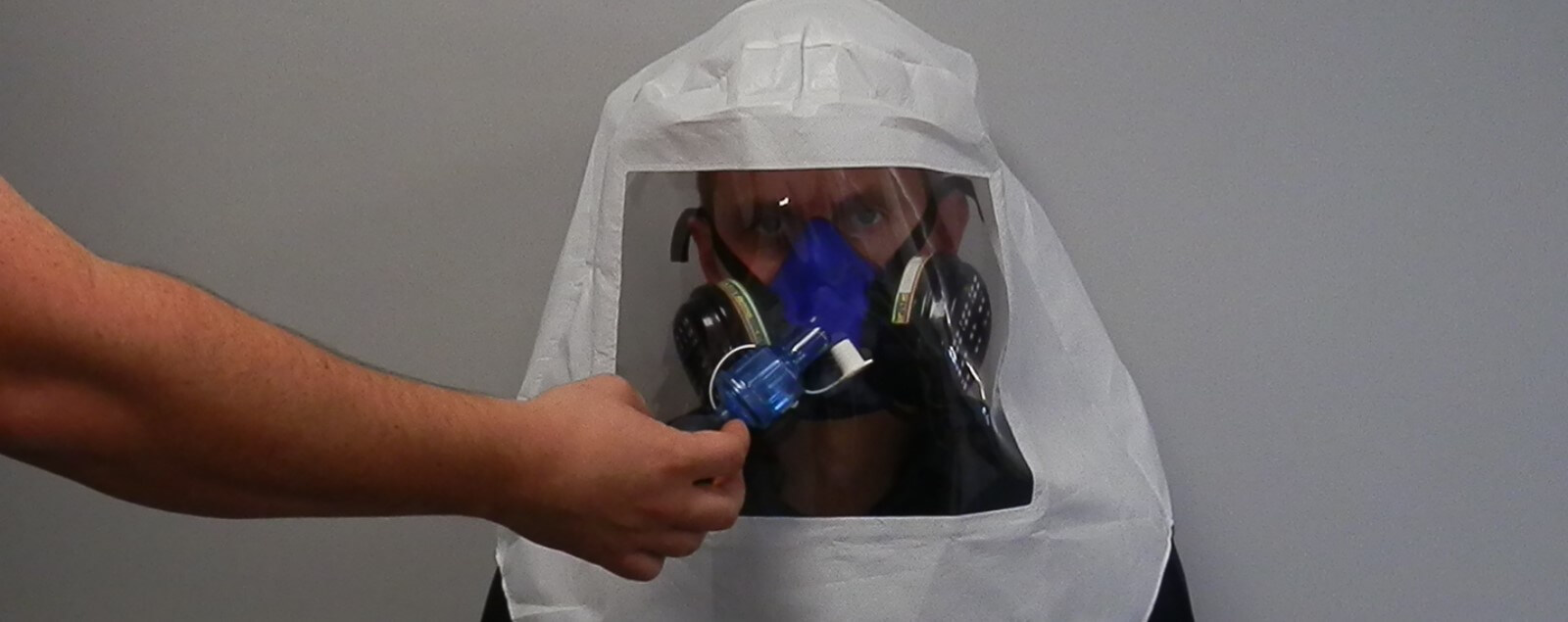
During qualitative face fit testing, the individual wears their selected respirator while a testing hood is placed over their head and shoulders.
A test agent is introduced into the hood, and the wearer completes a series of prescribed exercises designed to assess whether the respirator maintains an adequate seal during normal movements.
These exercises may include normal breathing, deep breathing, turning the head, moving the head up and down, talking and bending.
If the wearer detects the test agent during the assessment, this can indicate that the respirator is not providing an adequate fit.
Where the test is unsuccessful, the respirator must not be considered suitable for that individual in the configuration tested.
The cause of the failure needs to be investigated.
In some circumstances, selecting a different respirator make, model or size may resolve the problem. However, where facial hair is interfering with the sealing surface, simply tightening the straps or adjusting the mask is unlikely to provide a reliable solution.
The employee may need to shave the relevant area before testing can proceed successfully or use a suitable alternative form of respiratory protection.
For employers, this demonstrates why preparation is so important.
Arranging a face fit test for employees in Kent without first explaining the clean-shaven requirement can result in wasted appointments and delays to work that requires respiratory protection.
At SAMS LTD, our professional Respiratory Qualitative Face Fit Testing service helps employers assess the suitability of tight-fitting respirators for their employees.
We work with businesses throughout Kent and the South East, helping organisations arrange competent testing and maintain appropriate respiratory protection arrangements.
Is Face Fit Testing a Legal Requirement in the UK?
Face fit testing is an important part of complying with UK workplace health and safety requirements where tight-fitting respiratory protective equipment is necessary.
Employers have duties under legislation including the Health and Safety at Work etc. Act 1974, the Control of Substances Hazardous to Health Regulations 2002 (COSHH) and, where applicable, the Control of Asbestos Regulations 2012.
These duties require employers to assess workplace hazards and implement appropriate measures to protect employees from exposure to harmful substances.
Where respiratory protective equipment is required, employers must ensure that it is suitable for the wearer, the task and the substances involved.
HSE guidance requires face fit testing for tight-fitting respirators, including disposable filtering facepieces and reusable half-mask respirators, before they are relied upon for protection in hazardous environments.
Testing must be undertaken by a competent person using an appropriate method.
For businesses employing workers who regularly use FFP3 masks or other tight-fitting respirators, professional Face Fit Testing in Kent and the South East can therefore form an essential part of their respiratory protection arrangements.
However, employers should understand that a successful face fit test is only one element of effective respiratory protection.
Workers must also receive suitable instruction and training, use the equipment correctly, undertake pre-use seal checks and follow the relevant maintenance and replacement procedures.
It is also important to recognise that UK health and safety legislation does not require every employee to be clean shaven at all times.
The clean-shaven requirement applies where facial hair would interfere with the effective seal of tight-fitting respiratory protective equipment.
Where an employee has facial hair that cannot be removed, an alternative form of respiratory protection may be necessary.
Employers should select equipment based on the workplace risk assessment rather than assume that a particular mask will be suitable for everyone.
Can You Wear a Respirator If You Have a Beard?
Having a beard doesn’t automatically mean that somebody cannot use respiratory protective equipment.
However, it does create an important consideration when selecting the correct type of respirator.
Tight-fitting respiratory protective equipment depends on a reliable seal between the facepiece and the wearer’s skin.
If facial hair is positioned within that sealing area, the respirator may not provide the intended protection.
For employees who cannot or do not wish to shave, a suitable alternative may be a loose-fitting powered respirator incorporating a hood or helmet.
Unlike tight-fitting masks, appropriate loose-fitting respiratory protection does not depend on a close seal against the face.
This means that some types may be suitable for people with beards or other facial hair.
However, the equipment must still provide adequate protection against the hazards identified in the workplace risk assessment.
The choice of respiratory protective equipment should consider factors such as the airborne contaminants present, the required level of protection, the nature of the work, the working environment and the individual user’s needs.
For example, a worker cutting concrete may require protection against respirable crystalline silica, while an employee involved in asbestos-related work may have different respiratory protection requirements.
Employers should never assume that one type of respiratory protective equipment will be suitable for every task or employee.
Our Face Fit Testing Services in Kent focus on qualitative testing for suitable tight-fitting respirators. Where alternative equipment is required, employers should ensure that it is selected appropriately for the hazards involved.
How to Prepare for a Qualitative Face Fit Test
Preparing correctly for a face fit test can help ensure that the assessment runs smoothly and provides a reliable result.
Whether you are attending an individual appointment or your employer has arranged on-site face fit testing in Kent, there are several important steps to follow.
Arrive Clean Shaven
Employees must be clean shaven wherever the respirator’s sealing surface contacts their face.
Shaving should take place sufficiently close to the appointment to meet the applicable testing requirements, with HSE guidance recommending being clean shaven in the seal area within the preceding eight hours.
Bring the Correct Respirator
The face fit test assesses a particular make, model and size of respirator.
Employees should confirm with their employer or testing provider which mask is being tested and whether they need to bring it to the appointment.
A successful test for one respirator does not automatically establish that a different make, model or size will fit correctly.
Avoid Eating, Drinking and Smoking Before Testing
For qualitative face fit testing, delegates should avoid eating, drinking anything other than water, smoking or vaping for at least 30 minutes before the test, in accordance with the relevant testing procedure.
These activities may interfere with the wearer’s ability to detect the test agent accurately.
Follow the Tester’s Instructions
During the assessment, the wearer will be asked to undertake a series of prescribed exercises while wearing the respirator.
These movements are designed to assess whether the mask maintains an adequate fit during activities representative of normal use.
Tell the Tester About Any Concerns
If you have facial hair, experience difficulty achieving a comfortable fit or have concerns about wearing the selected respirator, inform the tester before the assessment begins.
You should also mention relevant changes that may affect the mask’s fit.
Understand the Importance of Pre-Use Seal Checks
Even after passing a face fit test, employees must carry out a pre-use seal check whenever they put on their respirator.
This helps identify obvious fitting problems before entering an area where respiratory protection is required.
For employers arranging qualitative face fit testing across the South East, providing employees with clear instructions before their appointments can reduce avoidable delays and support an efficient testing process.
Why Choose SAMS Ltd for Fit2Fit-Accredited Face Fit Testing?
When it comes to protecting employees from hazardous airborne substances, selecting a competent face fit testing provider is essential.
At SAMS LTD, we provide professional Face Fit Testing in Kent and the South East, helping construction companies, contractors, manufacturers and other organisations assess whether their employees’ tight-fitting respiratory protective equipment fits correctly.
Our service is delivered by Fit2Fit-accredited face fit testers, giving employers additional confidence that testing is undertaken by individuals whose competence has been assessed against recognised industry criteria.
Whether you need testing for a small number of employees or a larger workforce, our aim is to provide a professional and convenient service that supports your workplace health and safety responsibilities.
What Is Fit2Fit Accreditation?
Fit2Fit is an industry-led accreditation scheme developed by the British Safety Industry Federation (BSIF), with input from the Health and Safety Executive.
The scheme assesses the competence of individuals carrying out respiratory protective equipment face fit testing.
Face fit testing requires appropriate knowledge, equipment, procedures and an understanding of the limitations of the testing methods used.
Using a Fit2Fit-accredited tester provides additional assurance that the individual undertaking the assessment has demonstrated competence against the relevant scheme requirements.
For employers arranging respiratory face fit testing in Kent, choosing an accredited tester can help support a more reliable and professionally managed testing process.
Further information about the scheme is available from the Fit2Fit website.
The Benefits of Choosing SAMS Ltd
At SAMS LTD, we understand that employers need practical health and safety solutions that support their operations without creating unnecessary disruption.
Our professional Qualitative Face Fit Testing Services offer several advantages.
Fit2Fit-Accredited Testers
Our testing is delivered by Fit2Fit-accredited professionals, helping employers access competent face fit testing.
Professional Qualitative Face Fit Testing
We assess whether a particular make, model and size of suitable tight-fitting respirator provides an adequate fit for the individual wearer.
On-Site Face Fit Testing
We can arrange face fit testing at business premises and workplaces, helping employers organise assessments for their workforce without requiring employees to travel individually to another location.
Face Fit Testing in Kent and the South East
Our services are aimed at businesses across Kent and the wider South East, including organisations in Canterbury, Maidstone, Ashford, Sittingbourne, Medway, Thanet, Dover and surrounding areas.
Documented Testing Results
Face fit testing records help employers maintain evidence of the assessments undertaken and identify which respirators have been successfully tested for individual employees.
Support for Workplace Health and Safety
Our service helps employers establish whether their selected tight-fitting respiratory protective equipment fits the people expected to wear it.
For organisations looking for a reliable face fit testing company in Kent, SAMS LTD provides professional testing that can be incorporated into wider workplace respiratory protection arrangements.
Find out more about our Respiratory Qualitative Face Fit Testing Services.
Frequently Asked Questions About Face Fit Testing
Why do you have to be clean shaven for a face fit test?
You must be clean shaven wherever a tight-fitting respirator seals against your face because facial hair can create gaps between the mask and your skin.
These gaps may allow contaminated air to enter the respirator without passing through its filters, reducing the protection provided.
Can I have a face fit test with stubble?
Stubble within the respirator’s sealing area can compromise the fit.
Workers should be clean shaven in the relevant area before attending their appointment. HSE guidance recommends shaving within the preceding eight hours.
Is Fit2Fit accreditation important for face fit testing?
Fit2Fit is a recognised industry accreditation scheme that assesses the competence of individuals carrying out respiratory face fit testing.
Choosing a Fit2Fit-accredited tester can provide employers with additional confidence that the testing is being undertaken by a competent professional.
Is face fit testing a legal requirement?
Where tight-fitting respiratory protective equipment is required to protect employees against workplace hazards, HSE guidance requires appropriate face fit testing to establish that the selected respirator fits the wearer.
Employers must also ensure that the equipment is suitable, correctly used and properly maintained.
Can I wear a respirator if I have a beard?
Some types of respiratory protective equipment can be suitable for people with beards.
However, tight-fitting respirators may not provide adequate protection where facial hair interferes with the seal.
A suitable loose-fitting powered respirator may be an alternative, depending on the workplace hazards and required protection.
How do I book a face fit test with SAMS Ltd?
Businesses can arrange Face Fit Testing in Kent and the South East by contacting SAMS LTD.
Visit our Respiratory Qualitative Face Fit Testing page to learn more about the service and discuss your requirements.
Whether you need testing for an individual employee, a small team or a larger workforce, our team can help you enquire about suitable arrangements.
Book Your Face Fit Testing with SAMS Ltd
Being clean shaven for a face fit test is not simply a formality. It is an essential precaution when using tight-fitting respiratory protective equipment because facial hair can compromise the seal and allow hazardous airborne contaminants to enter the mask.
For employers, ensuring workers have suitable respiratory protection involves more than simply supplying disposable masks or reusable respirators.
The selected equipment must be appropriate for the hazards, fit the individual correctly and be used and maintained in accordance with the relevant requirements.
Professional face fit testing helps establish whether a particular tight-fitting respirator provides an adequate fit for the person expected to wear it.
At SAMS LTD, we provide Fit2Fit-accredited Qualitative Face Fit Testing in Kent and across the South East, helping employers support their respiratory protection arrangements.
Our service is suitable for businesses across construction, engineering, manufacturing, demolition, maintenance and other industries where employees may be required to wear tight-fitting respiratory protective equipment.
Whether you are looking for face fit testing in Canterbury, Maidstone, Medway, Ashford, Sittingbourne, Thanet or elsewhere in Kent and the South East, contact our team to discuss your requirements.
Arrange Professional Face Fit Testing in Kent and the South East
If your employees are required to wear tight-fitting respiratory protective equipment, make sure the masks have been appropriately selected and tested.
Contact SAMS LTD today to enquire about professional qualitative face fit testing for your workforce.
Visit Our Respiratory Qualitative Face Fit Testing Page
Protect your workforce with professional Face Fit Testing in Kent and the South East from SAMS LTD.
Make sure the right respirator fits the right person.