
Is Silica The New Asbestos? The Hidden Dangers of Silica Dust Exposure
Could One of the Biggest Workplace Health Risks Be Hiding in Plain Sight?
For decades, asbestos has been recognised as one of the most dangerous substances encountered in UK workplaces, particularly throughout the construction and building maintenance industries. Its devastating impact on workers’ health has led to strict regulations, extensive awareness campaigns and an outright ban on its use in the UK.
But could another hazardous substance be creating a similar occupational health problem?
Silica dust is increasingly being compared to asbestos, and for good reason. Both substances can cause serious, potentially fatal lung diseases, both can be inhaled without workers realising the danger, and both can have devastating consequences that only become apparent years after exposure.
The difference is that while asbestos is banned, silica remains a naturally occurring component of many materials used in everyday construction and manufacturing activities.
From cutting concrete and drilling brickwork to grinding stone and installing kitchen worktops, workers across the UK may encounter respirable crystalline silica (RCS) during tasks that seem perfectly routine.
At SAMS LTD, we believe that understanding workplace hazards is one of the most important steps towards preventing occupational illness.
Our online Silica Dust Awareness Course helps employees, supervisors and employers recognise the risks associated with silica dust exposure, understand their responsibilities and learn about the precautions needed to protect respiratory health.
So, is silica really the new asbestos? Let’s look at the facts.
What Is Silica Dust?
Silica is a naturally occurring mineral compound made from silicon and oxygen. It is found in many types of rock, sand, stone and other materials commonly used in construction, engineering and manufacturing.
Crystalline silica is present in materials such as sandstone, granite, bricks, concrete and mortar.
On its own, the presence of silica in a solid material does not necessarily create an airborne health hazard. The problem arises when certain activities release fine particles into the surrounding air.
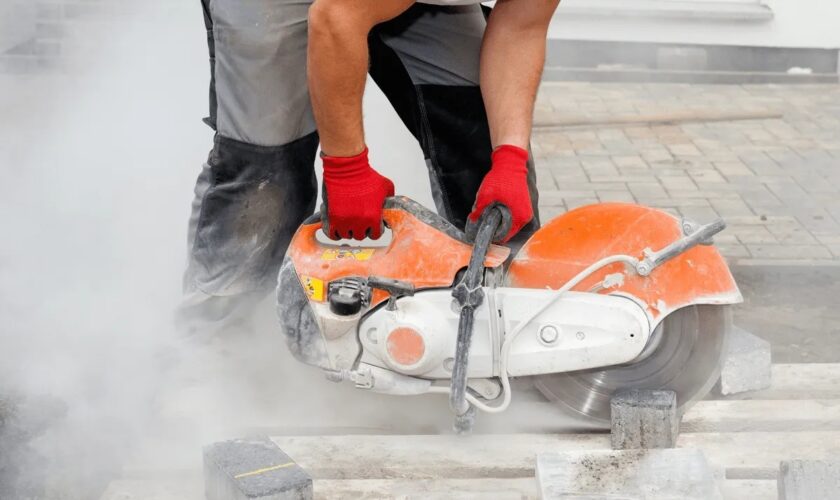
Cutting, drilling, crushing, grinding, sanding and polishing silica-containing materials can generate airborne dust, including extremely small particles known as respirable crystalline silica (RCS).
These particles can be inhaled deep into the lungs, where they may cause inflammation, permanent tissue damage and serious respiratory disease.
One of the most concerning aspects of silica dust is that the most hazardous particles are often too small to see with the naked eye.
A workplace does not need to be surrounded by thick clouds of visible dust for workers to be exposed to respirable crystalline silica.
This makes silica dust awareness particularly important. Employees need to recognise which materials and activities may generate hazardous dust rather than relying on whether they can actually see it.
Why Is Silica Being Compared to Asbestos?
The comparison between silica and asbestos is not simply a dramatic headline.
Both substances have been responsible for serious occupational lung disease, and both demonstrate how repeated exposure to hazardous airborne particles can have consequences long after the original work has finished.
Both Can Cause Serious and Irreversible Lung Disease
Asbestos exposure is associated with diseases including asbestosis, mesothelioma and lung cancer.
Respirable crystalline silica exposure can cause silicosis, lung cancer and chronic obstructive pulmonary disease (COPD).
Although these diseases have different causes and characteristics, they can significantly affect a person’s quality of life and may prove fatal.
The Health Effects May Take Years to Develop
Workers exposed to hazardous dust may feel perfectly healthy while undertaking their daily activities.
Unfortunately, some occupational respiratory diseases develop gradually, meaning the consequences of exposure may not become apparent until years later.
This delay can create a false sense of security, particularly when workers have been carrying out the same tasks for many years without experiencing obvious symptoms.
Both Can Be Encountered During Construction Work
Asbestos remains a concern in older buildings, particularly where asbestos-containing materials may be disturbed during refurbishment, maintenance or demolition.
Silica dust, however, can be generated when working with materials used in both old and new buildings.
This means that even modern construction projects can present significant silica dust exposure risks.
Both Require Effective Workplace Controls
Employers have legal responsibilities to identify hazardous substances, assess the risks and implement suitable control measures.
Training, supervision, safe working methods and appropriate protective equipment all play important roles in managing exposure.
However, there is an important distinction.
Silica is not asbestos, and the two substances are not interchangeable. They have different properties, associated diseases and regulatory arrangements.
The comparison is useful because it highlights the seriousness of occupational dust exposure, not because silica and asbestos present identical risks.
Is Silica Dust Really as Dangerous as Asbestos?
Silica dust should be treated as a serious occupational health hazard in its own right.
The Health and Safety Executive (HSE) identifies respirable crystalline silica as one of the major health risks affecting construction workers.
Historical HSE-commissioned estimates have attributed more than 500 construction worker deaths annually to silica exposure, illustrating the scale of the problem.
These estimates should not be interpreted as a current annual count, but they demonstrate why silica dust prevention remains such an important workplace safety issue.
The danger is not limited to exceptionally dusty environments or specialist industrial processes.
Everyday activities such as drilling into concrete, cutting paving slabs or grinding mortar can generate respirable crystalline silica.
The actual level of risk depends on factors including the material being worked, the amount of dust generated, the duration and frequency of exposure, and the effectiveness of the controls being used.
For employers and employees, the important message is straightforward: silica dust is not harmless simply because it comes from familiar building materials.
Where Is Silica Dust Found?
One of the reasons silica dust presents such a widespread workplace hazard is the number of materials that contain crystalline silica.
Workers can encounter silica-containing materials across construction sites, manufacturing facilities, workshops, quarries and engineering environments.
Common examples include:
- Concrete: Cutting, chasing, drilling or breaking concrete can release respirable crystalline silica.
- Bricks and blocks: Brick cutting, drilling and masonry work can generate hazardous airborne dust.
- Sandstone: Many types of sandstone contain high concentrations of crystalline silica.
- Granite: Cutting, shaping and polishing granite can release silica-containing particles.
- Mortar: Grinding or raking out mortar joints can produce significant dust.
- Tiles and ceramics: Certain cutting, drilling and manufacturing activities can generate silica dust.
- Engineered stone: Some manufactured stone products contain very high concentrations of crystalline silica, making uncontrolled cutting and fabrication particularly hazardous.
- Sand and aggregates: Processing, crushing and handling certain materials can create airborne silica-containing dust.
However, understanding where silica dust is found is only part of the picture.
It is equally important to recognise which activities can release respirable particles and how workplace conditions influence exposure.
For example, dry cutting paving slabs with a power tool can create substantial airborne dust, particularly when suitable suppression or extraction equipment is not used.
Similarly, grinding mortar in a confined or poorly ventilated area can increase the potential for workers to inhale hazardous particles.
Our Silica Dust Awareness training helps delegates identify materials, industries and workplace activities where silica dust exposure may occur.
What Is Silica Dust Exposure and How Does It Happen?
Silica dust exposure occurs when a person inhales airborne particles containing respirable crystalline silica.
Exposure can happen during the task that generates the dust, but it may also affect other people working nearby.
For example, a construction worker cutting concrete may generate airborne dust that travels into an adjacent working area, potentially exposing colleagues who are not directly involved in the cutting operation.
Dust can also be disturbed again after settling on floors, equipment, clothing and other surfaces.
This is why activities such as dry sweeping or using compressed air to clean dusty work areas can create additional exposure risks.
The amount of silica dust a worker inhales depends on several factors, including the silica content of the material, the equipment used, the duration of the task, the working environment and the effectiveness of the control measures.
Importantly, the absence of visible dust does not guarantee that exposure is adequately controlled.
Workers and supervisors need to understand how exposure occurs and why appropriate precautions must be followed consistently.
What Health Problems Can Silica Dust Cause?
The consequences of prolonged or intense exposure to respirable crystalline silica can be severe.
Although not every person exposed to silica dust will develop occupational disease, the potential health effects are serious enough to make effective prevention essential.
Silicosis – Permanent Lung Damage
Silicosis is a serious lung disease caused by inhaling respirable crystalline silica.
When fine silica particles enter the lungs, they can trigger inflammation and the formation of scar tissue.
Over time, this scarring can reduce lung function and make breathing increasingly difficult.
Symptoms may include a persistent cough, breathlessness, tiredness and difficulty undertaking everyday physical activities.
Silicosis is irreversible, and severe cases can be disabling or fatal.
While the disease is often associated with exposure over many years, particularly high exposure levels can cause it to develop more rapidly.
Lung Cancer
Occupational exposure to respirable crystalline silica is a recognised cause of lung cancer.
The risk is particularly concerning because exposure may occur repeatedly during familiar workplace activities without workers appreciating the long-term consequences.
Chronic Obstructive Pulmonary Disease (COPD)
Silica dust exposure can contribute to COPD, a group of lung conditions that cause breathing difficulties and restrict airflow.
People affected may experience persistent coughing, breathlessness and reduced physical stamina.
Other Health Effects
Exposure to respirable crystalline silica has also been associated with other health conditions, including kidney disease.
The possibility of permanent illness reinforces why silica dust exposure prevention must be taken seriously before symptoms develop.
For employees, understanding these health risks can help explain why dust controls, safe working procedures and suitable respiratory protection are essential rather than optional precautions.
Silica Dust Regulations – What Does UK Law Say?
Unlike asbestos, silica has not been banned from use in construction materials.
However, that does not mean employers can allow workers to be exposed to hazardous levels of silica dust.
In the UK, occupational exposure to respirable crystalline silica is controlled principally through the Control of Substances Hazardous to Health Regulations 2002 (COSHH).
Employers must assess the risks associated with hazardous substances and prevent exposure where reasonably practicable.
Where exposure cannot be prevented, it must be adequately controlled.
For silica dust, this means employers need to consider how their activities may generate respirable crystalline silica, who could be exposed and what measures are required to minimise the risks.
This may involve changing working methods, using appropriate dust suppression or extraction equipment, providing suitable respiratory protective equipment and ensuring employees receive relevant information, instruction and training.
Employers must also maintain appropriate controls and provide health surveillance where the legal criteria are met.
Employees have responsibilities too. These include following safe working procedures, using control measures correctly and reporting concerns about equipment or unsafe working conditions.
Understanding silica dust regulations is therefore important for everyone involved in activities where respirable crystalline silica may be present.
What Are the UK Silica Dust Exposure Limits?
The workplace exposure limit for respirable crystalline silica in Great Britain is 0.1 milligrams per cubic metre (0.1 mg/m³), measured as an eight-hour time-weighted average.
This limit is set out in HSE workplace exposure guidance.
However, the existence of a workplace exposure limit does not mean that exposure below this concentration is automatically harmless.
Respirable crystalline silica is a hazardous substance, and employers must implement suitable controls to reduce exposure as far as reasonably practicable.
The limit should not be treated as a target that employers can routinely work towards.
Instead, the emphasis should be on preventing exposure wherever possible and controlling the risks effectively when dust-generating activities cannot be avoided.
Workplace exposure assessment and, where appropriate, air monitoring can help employers evaluate whether their control measures are effective.
Employees should also understand that they cannot accurately assess their own exposure simply by looking at how much dust is visible.
This is one of the reasons why appropriate silica dust training and effective workplace supervision are so important.
Who Should Complete a Silica Dust Awareness Course?
Silica dust exposure is not limited to one trade or industry.
Many workers encounter silica-containing materials as part of their normal duties, sometimes without recognising the potential hazards.
Our Silica Dust Awareness Course is particularly relevant to construction workers, builders, bricklayers, groundworkers, demolition operatives, stonemasons, engineers, maintenance teams, manufacturing employees and people working with concrete, ceramics or engineered stone.
The training is also valuable for site supervisors, managers, business owners and health and safety professionals responsible for overseeing potentially dusty activities.
For employers, providing suitable awareness training can help reinforce workplace controls and improve employees’ understanding of their responsibilities.
For individuals, completing an online course can provide useful knowledge about the substances they may encounter during their working day.
Whether you are new to construction or have spent many years working with stone, concrete and masonry, developing a better understanding of silica dust hazards can help you recognise risks that might otherwise be overlooked.
Silica Dust Training Online – How SAMS LTD Can Help
At SAMS LTD, we understand that businesses need practical, accessible health and safety training that fits around existing work commitments.
Our Silica Dust Awareness Course is delivered through flexible online video e-Learning, allowing delegates to complete the training at their own pace.
The course provides an introduction to silica, the potential health consequences of exposure, relevant workplace responsibilities and the measures used to control the risks.
Book Your Online Silica Dust Awareness Course with SAMS LTD
Silica dust might not attract the same public attention as asbestos, but the risks associated with respirable crystalline silica should never be ignored.
For workers regularly cutting, drilling, grinding or handling silica-containing materials, understanding the hazards can make an important difference to how they approach their daily activities.
At SAMS LTD, our online Silica Dust Awareness Course helps employees, supervisors and employers develop essential knowledge about silica dust exposure, occupational respiratory disease and the precautions needed to manage workplace risks.
Whether you are looking to improve your own health and safety awareness or provide training for employees across your business, our flexible online course offers a convenient starting point.
Don’t wait for occupational illness to become a problem before taking silica dust exposure seriously.