
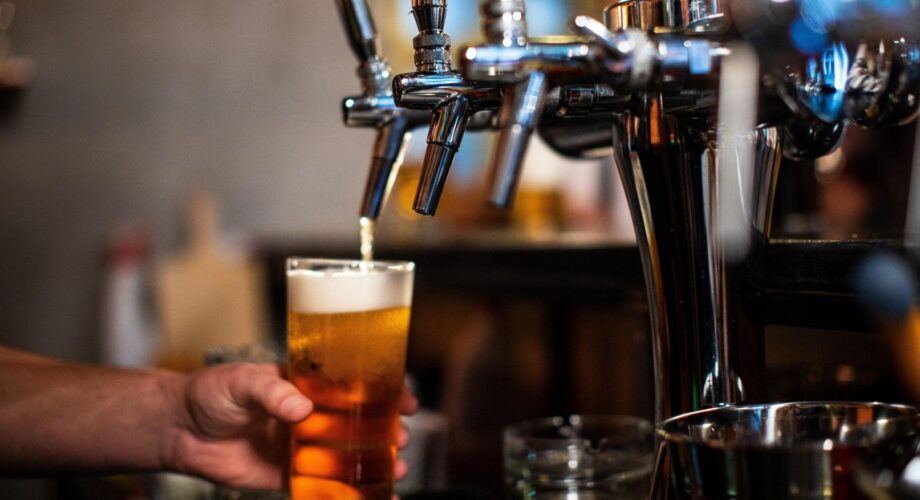
Don’t Take Advice From The Man Down The Pub: Get Event Health & Safety Advice From the Experts
Everyone knows someone who has an opinion on everything.
You mention that you are organising a festival, community event, concert, sporting occasion or village fete, and suddenly the man down the pub becomes an expert in event health and safety.
“You don’t need to do that.”
“We’ve never bothered with one of those before.”
“Just stick a couple of barriers there.”
“You’ll be fine.”
“We ran an event like that twenty years ago and nobody got hurt.”
It might be well-intentioned advice. It might even be delivered with enormous confidence. But when you are responsible for the safety of employees, contractors, volunteers, performers and potentially thousands of members of the public, confidence and experience-by-anecdote are not substitutes for professional competence.
At SAMS LTD, we have been providing professional health and safety support since 1999. Our Event Health & Safety services help organisers identify risks, develop appropriate safety arrangements and manage events safely and successfully.
When it comes to health and safety at events, there is an important principle worth remembering:
Don’t take advice from the man down the pub. Take advice from people who actually know what they’re talking about.
Everyone Has an Opinion About Health & Safety
Health and safety is one of those subjects where almost everyone seems to have an opinion.
Unfortunately, those opinions are often based on myths, assumptions, outdated information or somebody’s experience of one particular situation.
You might hear that a certain piece of paperwork is “legally required” when it isn’t. Equally, somebody might tell you that you don’t need to consider a particular risk when you absolutely should.
The problem is that inaccurate advice can sound remarkably convincing.
When organising an event, decisions should be based on the actual circumstances, foreseeable risks, relevant legal responsibilities and recognised good practice. That requires knowledge and judgement rather than hearsay.
Professional event health and safety consultants aren’t there to create unnecessary rules. Their role is to help you understand the risks associated with your event and determine sensible, proportionate ways of controlling them.
“We’ve Always Done It This Way”
This is perhaps one of the most dangerous phrases in health and safety.
Just because something has been done before without an accident doesn’t automatically mean it is safe.
Perhaps the previous event was smaller. Maybe fewer people attended. The layout could have changed. Different contractors might be involved. New equipment may have been introduced. The weather could be different. The venue may have changed, or lessons may have been learned elsewhere in the events industry.
Even if nothing obvious has changed, the absence of previous accidents doesn’t prove that suitable controls were in place.
Effective health and safety in event management requires organisers to assess the event they are actually planning rather than assuming that what happened last year will automatically be appropriate this year.
Previous experience is extremely valuable, but it should inform the planning process rather than replace it.
“You Don’t Need a Risk Assessment”
If the man down the pub tells you that risk assessments are simply pointless paperwork, it might be time to change the subject.
Risk assessment is fundamental to effective health and safety for events.
It provides a structured way of considering what could cause harm, who could be affected, what precautions are already in place and whether additional measures are required.
For an event, this could involve crowd movement, temporary structures, vehicles, electrical equipment, fire, work at height, slips and trips, catering, alcohol, contractors, adverse weather, medical emergencies and many other hazards.
The scale and complexity of the assessment should reflect the event.
A small community gathering doesn’t necessarily require the same arrangements as a festival attracting thousands of people. Good event health & safety is about proportionality rather than generating paperwork for its own sake.
“It’s Only a Small Event”
Small doesn’t automatically mean risk-free.
A village fete, school event, charity fundraiser, local celebration or small sporting event may involve fewer people than a major festival, but organisers can still encounter significant hazards.
Temporary electrical supplies, inflatables, marquees, generators, catering equipment, vehicles, alcohol, performers and temporary structures can all introduce risks regardless of overall attendance.
Smaller events may also rely heavily on volunteers who have less experience of formal health and safety event management.
That doesn’t mean small events should become buried under bureaucracy. It means the precautions should be appropriate to the actual risks involved.
A proportionate health and safety plan for events can help everyone understand what needs to happen without unnecessarily complicating the occasion.
“Just Copy Last Year’s Event Health and Safety Plan”
Last year’s paperwork can provide a useful starting point, but changing the date at the top isn’t an effective event health and safety plan.
Every event should be reviewed according to its current circumstances.
Has the layout changed? Are attendance numbers expected to increase? Are there different attractions? Has the stage moved? Are new contractors involved? Has the emergency access changed? Is there a new temporary structure? Are different catering providers attending?
Even relatively minor alterations can introduce new risks or affect existing control measures.
Your event health and safety policy, risk assessments and associated arrangements should therefore reflect what is actually planned rather than simply what happened previously.
An experienced consultant can review previous documentation, retain what remains relevant and identify where changes are necessary.
“The Contractor Will Deal With That”
Contractors play a crucial role in events, but appointing a contractor doesn’t mean organisers should simply stop asking questions.
Large events can involve staging companies, electricians, caterers, security providers, medical teams, marquee companies, entertainers, waste contractors and numerous other suppliers.
Each contractor may be competent within their particular field, but somebody still needs to understand how all those activities fit together.
For example, one contractor may install a barrier that affects another team’s emergency access. A caterer could introduce equipment that changes fire risks. Production equipment could alter pedestrian routes or create new electrical requirements.
Good events health and safety depends upon coordination and communication.
Relevant risk assessments, method statements and other information should be considered where appropriate, but documentation alone isn’t enough. Organisers need to understand who is responsible for what and ensure activities are properly coordinated.
“Just Download an Event Health and Safety Checklist”
An event health and safety checklist can be extremely useful, but it isn’t a substitute for competent safety planning.
Checklists can prompt organisers to consider common issues such as first aid, fire safety, crowd management, temporary structures, contractors and emergency arrangements.
The difficulty is that no generic checklist can understand your particular event.
A checklist downloaded from the internet doesn’t know that your entrance becomes extremely congested at 7pm. It doesn’t know that the ground behind the main marquee floods after heavy rain. It doesn’t know where your generators are positioned or how emergency vehicles will enter the site.
Use an event health and safety checklist as a tool, not as your entire safety management system.
“We’ll Sort It Out on the Day”
Event day is the worst possible time to discover that something important hasn’t been considered.
By then, contractors may already be working, vehicles may be arriving, temporary structures may be erected and members of the public could soon be entering the site.
Problems that might have been straightforward to resolve several weeks earlier can become extremely difficult when there is an opening deadline approaching.
Effective health and safety at an event starts during planning.
Organisers should consider risks, responsibilities, contractor arrangements, emergency procedures and necessary resources well before the event takes place.
This allows problems to be resolved properly instead of relying on last-minute improvisation.
A Good Event Health and Safety Plan Should Be Practical
One reason people become cynical about health and safety is that they have encountered paperwork that appears to have little connection with reality.
A good event health and safety plan should be different.
It should provide practical information that helps organisers, employees, volunteers and contractors understand how the event will be managed.
Depending on the event, the plan may address responsibilities, risk assessments, contractor management, crowd arrangements, fire safety, medical provision, emergency procedures, temporary structures, traffic management, communication, weather and evacuation arrangements.
Most importantly, the document needs to reflect the event itself.
A beautifully presented document that nobody reads and that bears little resemblance to what is happening on site is of limited value.
Professional event health and safety consultants can help turn safety planning into something useful rather than an administrative exercise.
Event Health & Safety Is About People, Not Paperwork
Behind every risk assessment, inspection and safety procedure are real people.
Visitors arrive expecting to enjoy themselves. Employees and volunteers expect to finish their shift safely. Performers, traders and contractors expect the event organiser to have appropriate arrangements in place.
That is why health and safety in events shouldn’t simply be regarded as an obstacle that needs to be overcome before an event can happen.
Good safety management supports a successful event.
Clear pedestrian routes can improve the visitor experience. Effective crowd management reduces confusion. Well-planned emergency procedures help teams respond confidently. Proper contractor coordination can reduce delays and disputes.
Safety and a successful event are not competing objectives. Done properly, they support each other.
What Happens When Something Changes?
Even the best planning cannot predict everything.
Weather conditions change. Equipment fails. Contractors encounter delays. Visitor numbers can be higher than expected. An attraction may become unexpectedly popular. A route that appeared suitable during planning may become congested.
This is where competent health and safety event management becomes particularly important.
An effective plan should establish how changing circumstances will be identified, assessed and communicated.
People also need to know who has the authority to make decisions.
If high winds affect a temporary structure, who decides whether it remains in use? If a crowd begins building in one location, who can redirect people? If emergency access becomes obstructed, who has responsibility for resolving it?
These decisions shouldn’t depend on finding somebody who “reckons it’ll probably be alright”.
Professional Advice Should Still Be Proportionate
Using professional event health and safety consultants doesn’t mean removing every possible risk from an event.
That isn’t realistic, and it isn’t what sensible health and safety management is about.
Events are supposed to be enjoyable. Concerts are loud. Sporting activities can be physical. Festivals attract crowds. Outdoor events are exposed to the weather.
The objective is to identify significant foreseeable risks and manage them appropriately.
Experienced consultants understand the difference between sensible precautions and unnecessary restrictions.
That is particularly valuable for event organisers because poor advice can work in both directions. Being too relaxed about a significant risk can have serious consequences, while disproportionate precautions can create unnecessary expense and complexity.
Competent advice helps achieve the appropriate balance.
Don’t Wait Until Someone Asks for the Paperwork
Health and safety planning shouldn’t begin because a venue, insurer, local authority or other organisation suddenly asks to see your documentation.
By that stage, opportunities to make straightforward changes may already have been missed.
Bringing professional event health and safety support into the process earlier can allow potential issues to be identified while there is still time to resolve them efficiently.
For larger events, this can also support discussions with venues, contractors, emergency services, local authorities and other relevant stakeholders.
Early involvement is particularly helpful when an event includes unusual activities, significant temporary infrastructure, complex crowd arrangements or large numbers of contractors.
Learn From Previous Events – Not Pub Stories
There is enormous value in learning from previous events.
Organisers should review what worked, what didn’t, what incidents or near misses occurred and what could be improved next time.
That is very different from relying on anecdotes.
“Nothing happened last year” isn’t a meaningful review.
Instead, ask whether the controls worked effectively. Were there unexpected queues? Were emergency routes kept clear? Did contractors follow agreed arrangements? Were there communication problems? Did weather create difficulties? Were there any near misses?
This creates an opportunity for continual improvement.
Your next health and safety event should benefit from what you learned from the previous one.
Why Choose SAMS for Event Health & Safety?
At SAMS LTD, we’ve been providing professional health and safety support since 1999, giving our team extensive experience of helping organisations manage real-world risks.
Our Event Health & Safety services are designed to provide practical support for event organisers, venues and other organisations involved in delivering public events.
Our experience ranges from community events and smaller local occasions through to major events attracting thousands of visitors. We understand that every event is different and that safety arrangements need to reflect its size, location, activities, audience and risks.
Depending on your requirements, our event health and safety consultants can support the planning process, help develop your health and safety plan for events, review risk assessments and contractor information, attend relevant planning meetings and provide on-site health and safety support.
The objective isn’t to arrive with a clipboard and tell everybody what they’re doing wrong.
We work collaboratively with organisers and other stakeholders to identify practical solutions that protect people while helping the event run successfully.
Don’t Take Advice From The Man Down The Pub – Speak to SAMS
The man down the pub might know how to fix your boiler, predict Saturday’s football results and explain exactly what the Government should be doing.
Apparently, he knows quite a bit about event health & safety as well.
But when you’re responsible for an event, there are some decisions that shouldn’t be based on “my mate says”.
Professional health and safety for events is about understanding the specific risks associated with your event, applying appropriate knowledge and creating arrangements that work in practice.
From developing an event health and safety plan and reviewing risk assessments to contractor coordination, site inspections and on-the-day support, getting competent advice can help you plan with confidence.
At SAMS, our experienced team provides practical health and safety in event management support based on decades of professional experience.
So by all means, take the man down the pub’s advice about which pint to order.
For your Event Health & Safety, speak to SAMS LTD.