Emergency First Aid at Work Course – Be Prepared When It Matters Most
When it comes to maintaining health and safety at work, ensuring that employees have the knowledge, skills and confidence to respond to a medical emergency is essential.
Whether you operate a construction company, office, warehouse, retail business, hospitality venue or manufacturing facility, accidents and medical emergencies can happen at any time.
Knowing how to respond during those crucial first few minutes could make a significant difference to the outcome of an incident.
An Emergency First Aid at Work Course (EFAW) provides employees with essential practical skills to recognise medical emergencies, administer appropriate first aid and provide immediate assistance until professional medical help arrives.
At SAMS LTD, we specialise in delivering professional first aid and health and safety training courses designed to help individuals and businesses develop safer, more prepared working environments.
Our Emergency First Aid at Work Course combines essential theoretical knowledge with practical, hands-on training, helping delegates develop the confidence to respond effectively when an accident, injury or medical emergency occurs.
We also provide Emergency First Aid at Work Refresher Training to help existing workplace first aiders maintain their knowledge and practical skills.
Whether you are looking to fulfil your workplace first aid responsibilities, strengthen your company’s health and safety policy or simply develop valuable lifesaving skills, our experienced trainers can help.
Understanding the Importance of First Aid Training
Accidents and medical emergencies can occur anywhere, regardless of the industry, size of the business or nature of the working environment.
Although employers should take appropriate measures to prevent workplace accidents, even the most comprehensive health and safety management system cannot eliminate every potential risk.
Employees may suffer injuries involving machinery, slips, trips and falls, burns, cuts or manual handling activities. Medical emergencies such as cardiac arrests, seizures and choking incidents can also occur without warning.
Having appropriately trained first aiders available means that immediate assistance can be provided while professional medical support is arranged.
Effective first aid can help preserve life, prevent a casualty’s condition from deteriorating and support their recovery.
What Are the Legal Requirements for First Aid at Work?
Under the Health and Safety at Work etc. Act 1974, employers have a general duty to protect the health, safety and welfare of their employees, so far as is reasonably practicable.
More specifically, the Health and Safety (First-Aid) Regulations 1981 require employers to provide adequate and appropriate first aid equipment, facilities and personnel to ensure employees receive immediate attention if they are injured or taken ill at work.
Employers must assess their workplace first aid requirements to determine what arrangements are appropriate.
This includes considering the nature of the business, workplace hazards, the number of employees, working patterns, previous accidents and the availability of emergency medical services.
Depending on the findings of the first aid needs assessment, employers may need to provide employees with Emergency First Aid at Work training or the more comprehensive First Aid at Work qualification.
There is no universal number of trained first aiders required for every workplace. The appropriate level of provision depends on the circumstances and risks associated with each organisation.
For further information, employers can refer to the Health and Safety Executive’s First Aid at Work guidance.
Why First Aid Training Should Be Part of Your Health and Safety Policy
First aid provision should form an important part of an organisation’s wider approach to health and safety at work.
A comprehensive health and safety policy should identify how workplace emergencies will be managed, who is responsible for providing first aid and where employees can access first aid equipment.
Employees should know who their designated first aiders are, where first aid kits are located and how to raise the alarm during an emergency.
Appropriate health and safety posters, workplace notices and staff inductions can help communicate these arrangements effectively.
However, having procedures and equipment in place is only part of the solution. Employees must also have the appropriate knowledge and practical skills to respond when an emergency occurs.
By investing in professional first aid training, employers can strengthen their workplace safety arrangements and demonstrate a commitment to employee welfare.
Who Should Complete an Emergency First Aid at Work Course?
Emergency First Aid at Work training is particularly suitable for employees appointed to provide first aid within workplaces where the first aid needs assessment identifies EFAW as an appropriate level of training.
The course may be suitable for employees working in offices, retail premises, hospitality businesses, community organisations, leisure facilities and other working environments.
It can also provide valuable foundational knowledge for employees working in construction, manufacturing, warehousing and logistics, although higher-risk workplaces may require more comprehensive first aid training.
Business owners, managers, supervisors and employees with designated health and safety responsibilities can also benefit from developing their understanding of workplace first aid.
At SAMS LTD, our experienced team can help you identify a suitable first aid training option based on your workplace requirements.
What’s Involved with a First Aid Training Course?
One of the most common questions people ask before booking their training is: what does an Emergency First Aid at Work Course involve?
At SAMS LTD, our first aid training combines theoretical instruction with practical exercises, demonstrations and realistic workplace scenarios.
The aim is to ensure that delegates understand not only how to provide emergency first aid but also why particular actions are necessary.
A standard Emergency First Aid at Work course is typically delivered over one day and focuses on the essential skills required to respond to common workplace emergencies.
Delegates develop their understanding of the role and responsibilities of a workplace first aider, casualty assessment, emergency communication and appropriate first aid techniques.
The course typically covers the following key areas.
1. Assessing the Situation and Responding Safely
Before providing first aid, it is essential to assess the situation and determine whether it is safe to approach the casualty.
Workplace emergencies can involve additional hazards, including moving machinery, electrical equipment, hazardous substances, traffic, falling objects and unstable structures.
Attempting to assist someone without considering these hazards could place both the first aider and the casualty at further risk.
During an Emergency First Aid at Work Course, delegates learn the importance of recognising potential dangers, protecting themselves and others, and obtaining appropriate emergency assistance.
Training also reinforces the importance of remaining calm, communicating clearly and acting within the limits of your first aid training.
Understanding how to assess an emergency situation is particularly important within workplaces where conditions can change rapidly.
For employers, these principles complement wider health and safety risk assessment procedures and emergency planning arrangements.
2. Primary Survey and Casualty Assessment
A primary survey is a structured approach used to identify immediate threats to a casualty’s life and determine what assistance is required.
During first aid training, delegates learn how to assess a casualty’s responsiveness, airway and breathing, recognise life-threatening conditions and summon appropriate emergency assistance.
They also develop an understanding of the importance of recognising severe bleeding and other urgent concerns.
Having a structured approach can help first aiders remain focused during stressful situations, particularly when an accident occurs unexpectedly.
Training helps delegates understand how to prioritise their actions, communicate relevant information to emergency services and continue monitoring a casualty until further assistance arrives.
Practical exercises provide opportunities to develop these skills in a controlled learning environment, helping participants become more familiar with the assessment process.
3. CPR and Use of an AED
One of the most important elements of an Emergency First Aid at Work Course is learning cardiopulmonary resuscitation, commonly known as CPR, and how to use an automated external defibrillator (AED).
A cardiac arrest can happen without warning, and the immediate actions of those nearby can play a vital role in improving a casualty’s chances of survival.
During our first aid training, delegates develop an understanding of how to recognise a suspected cardiac arrest, contact emergency services and provide appropriate resuscitation.
Practical CPR exercises allow learners to develop their technique using specialist training equipment under the guidance of an experienced instructor.
Delegates also learn about automated external defibrillators and how these devices can support the emergency response to a cardiac arrest.
AEDs are increasingly available in workplaces, shopping centres, leisure facilities and other public locations.
However, having access to a defibrillator is only part of effective emergency preparedness. Employees should also understand where the equipment is located and how to respond when it is needed.
Standard Emergency First Aid at Work training focuses primarily on adult workplace emergencies. Organisations requiring specific infant and child first aid skills should consider appropriate paediatric first aid training.
4. Treating Minor and Major Injuries
Workplace injuries can vary considerably, from relatively minor cuts and grazes to serious incidents requiring urgent medical assistance.
Emergency First Aid at Work training helps delegates recognise common injuries and understand how to provide appropriate immediate assistance.
Core subjects typically include managing external bleeding, recognising shock and providing first aid for minor injuries such as small cuts, grazes and minor burns.
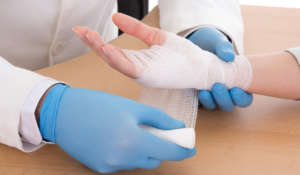
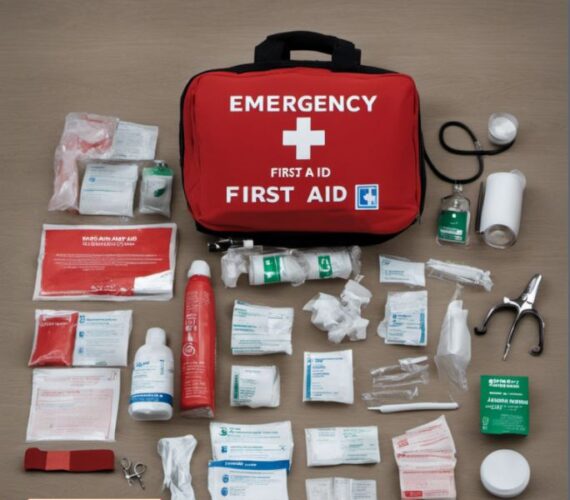
Practical training allows delegates to become familiar with first aid equipment, dressings and bandages, while developing their confidence in responding to injuries.
The course also reinforces the importance of recognising when an injury requires professional medical attention.
More complex injuries, including fractures, significant head injuries and certain serious burns, may require the broader training provided through a full First Aid at Work course.
Employers should consider the types of injuries that could reasonably occur within their working environment when determining which first aid qualification is most appropriate.
For example, a construction site or manufacturing facility may have different first aid requirements from a small office-based business.
5. Managing Medical Emergencies
Not every workplace emergency results from an accident or physical injury.
Employees, customers, contractors and visitors may experience sudden medical emergencies, even within environments generally considered to be low risk.
Emergency First Aid at Work training typically covers essential responses to choking, seizures, unconsciousness and other immediate life-threatening situations within the course syllabus.
Delegates learn how to recognise when someone requires urgent assistance, communicate effectively and obtain professional medical support.
Broader medical conditions, such as asthma attacks, diabetic emergencies, heart attacks and severe allergic reactions, are generally covered in greater depth through the more comprehensive First Aid at Work qualification.
Understanding the differences between first aid courses is important for employers arranging training.
Where employees work with individuals who have particular medical needs, additional or specialist training may be appropriate.
At SAMS LTD, our aim is to help delegates develop practical knowledge and confidence while recognising the limits of their training.
A workplace first aider is not expected to replace a medical professional. Their role is to provide appropriate immediate assistance until further medical support becomes available, where required.
6. Recording and Reporting
Effective workplace health and safety management involves more than responding to an accident.
Appropriate incident recording and reporting arrangements can help businesses understand what happened, identify recurring hazards and improve their existing safety procedures.
First aiders should understand their responsibilities regarding workplace accident records and the importance of communicating relevant information to the appropriate person within their organisation.
Accurate records can support accident investigations, health and safety risk assessments and reviews of workplace first aid arrangements.
Employers should also understand their responsibilities under the Reporting of Injuries, Diseases and Dangerous Occurrences Regulations 2013 (RIDDOR).
Certain work-related injuries, occupational diseases and dangerous occurrences must be reported to the relevant enforcing authority.
However, not every workplace injury or first aid incident is reportable under RIDDOR.
Understanding the distinction between internal accident recording and statutory reporting requirements is important for effective health and safety management.
First aid records must also be handled appropriately, taking account of confidentiality and relevant data protection requirements.
By incorporating suitable reporting procedures into your health and safety management system, your business can learn from incidents and identify opportunities to improve workplace safety.
Practical and Interactive Learning
At SAMS LTD, we believe that effective first aid training should involve much more than reading course materials or listening to presentations.
First aid is a practical skill, and developing confidence requires opportunities to practise techniques, ask questions and receive guidance from experienced instructors.
Our Emergency First Aid at Work courses combine structured theoretical learning with practical demonstrations, interactive activities and realistic emergency scenarios.
This approach helps delegates understand how their knowledge can be applied in real workplace situations.
Developing Confidence Through Practical First Aid Training
Experiencing a medical emergency can be stressful, particularly for someone who has never previously been required to provide first aid.
Practical training helps reduce uncertainty by allowing delegates to become familiar with emergency procedures and first aid equipment.
Through supervised exercises, participants can develop their casualty assessment skills, practise CPR, become familiar with AEDs and explore appropriate responses to common workplace injuries.
Our instructors provide guidance and feedback throughout the training, helping delegates understand the importance of correct techniques and effective communication.
The aim is to develop practical confidence alongside essential theoretical knowledge.
Learning Through Realistic Workplace Scenarios
Every workplace presents different health and safety challenges.
An employee working in a warehouse may encounter different emergencies from someone working in an office, restaurant or retail environment.
Scenario-based learning encourages delegates to consider how first aid principles apply to different situations.
It also highlights the importance of understanding workplace emergency procedures, communicating with colleagues and obtaining appropriate assistance.
By relating training to realistic circumstances, delegates can develop a clearer understanding of their responsibilities as workplace first aiders.
Classroom-Based and On-Site First Aid Training
At SAMS LTD, we understand that businesses have different operational requirements and training needs.
Our first aid training options can help individuals seeking a recognised first aid certificate, as well as employers arranging training for multiple members of staff.
Depending on your requirements and availability, training may be arranged at our training centre or at a suitable location within your workplace.
On-site first aid training can be particularly convenient for businesses looking to train several employees while reducing travel requirements and disruption.
It can also provide opportunities to discuss first aid arrangements within the context of your own working environment.
Although online health and safety courses are suitable for many awareness-based subjects, workplace first aid qualifications require appropriate practical training and assessment.
Learning essential first aid techniques under professional supervision is an important part of developing the necessary skills.
Find Out More About Our Emergency First Aid at Work Course
Book Your First Aid Training with SAMS Ltd Today
Now that you know what’s involved with a First Aid Training Course, take the next step towards a safer workplace. Contact SAMS Ltd today to book your training session or to discuss your company’s specific health and safety needs.
Empower your team with life-saving skills — because when it comes to safety, preparation makes all the difference.