
£15.00
Silica Dust Awareness Course
Understand the dangers of silica dust exposure, protect your respiratory health and develop essential workplace safety knowledge with our online Silica Dust Awareness Course.
Silica dust is a serious occupational health hazard affecting workers across construction, manufacturing, engineering and other industries where materials containing crystalline silica are cut, drilled, ground, crushed or disturbed.
Although silica is naturally present in many everyday building materials, the fine dust generated during certain workplace activities can pose significant risks to health when inhaled. Repeated exposure to respirable crystalline silica (RCS) can contribute to serious, potentially life-changing respiratory diseases, some of which may not become apparent until years after exposure.
At SAMS LTD, our Silica Dust Awareness Course provides accessible online training designed to help employees, supervisors and employers understand the dangers of silica dust, recognise high-risk activities and learn about the precautions needed to reduce workplace exposure.
Delivered through flexible video e-Learning, our silica dust awareness training can be completed online at your own pace, making it a convenient option for individuals and businesses looking to improve workplace health and safety knowledge.
Whether you work on construction sites, manufacture building products, undertake property renovations or supervise employees who may encounter silica-containing materials, understanding the risks is an important part of protecting yourself and those around you.
Silica Dust Course Description
Our Silica Dust Awareness Course is designed to provide a detailed understanding of silica, the potential health consequences of exposure and the practical measures that can be taken to reduce the risks associated with airborne silica dust.
The course begins by explaining what silica is, where it occurs naturally and why certain activities can release potentially harmful dust into the workplace.
Delegates will explore how exposure occurs, which materials are most likely to contain silica and why particular construction, manufacturing and industrial activities present greater risks.
The training then examines the health conditions associated with inhaling respirable crystalline silica, including the potentially devastating impact that long-term occupational respiratory disease can have on workers and their families.
Understanding these consequences helps reinforce why effective dust prevention and control measures are so important.
The course also considers the responsibilities of employers and employees under relevant UK health and safety legislation, including the Control of Substances Hazardous to Health Regulations 2002 (COSHH).
Finally, delegates are introduced to practical workplace control measures, including dust suppression, extraction systems, appropriate respiratory protective equipment and health surveillance.
Our silica dust training online provides a convenient way to develop awareness of these hazards without requiring attendance at a classroom training centre.
What Is Silica Dust?
Silica is a naturally occurring mineral compound made from silicon and oxygen. It is found in many types of rock, stone, sand and other materials commonly used throughout the construction and manufacturing industries.
Crystalline silica is present in materials such as sandstone, granite, concrete, mortar, bricks and certain manufactured stone products.
When these materials remain undisturbed, they do not necessarily create an airborne silica dust hazard. However, activities that cut, grind, drill, crush or otherwise disturb silica-containing materials can release extremely fine particles into the surrounding air.
These particles are commonly referred to as silica dust.
The greatest occupational health concern is respirable crystalline silica (RCS), which consists of very small particles capable of travelling deep into the lungs when inhaled.
Unlike larger dust particles that may be visible in the air or settle quickly on surfaces, respirable particles can be too small to see individually.
This means that workers can be exposed to harmful concentrations of silica dust even when a workplace does not appear particularly dusty.
Understanding what is silica dust and how exposure occurs is an essential first step towards preventing avoidable occupational illness.
Our online Silica Dust Awareness Course introduces these fundamental concepts before exploring the health risks, legal responsibilities and workplace controls in greater detail.
Where Is Silica Dust Found?
One of the most important aspects of silica dust awareness is understanding how commonly silica-containing materials are encountered.
Silica is found in numerous natural and manufactured products used in construction, engineering, manufacturing and related industries.
Common examples include:
- Concrete and cement-based products: Cutting, drilling, breaking or grinding concrete can release respirable crystalline silica.
- Bricks and blocks: Brick cutting, chasing and drilling can generate airborne dust containing silica.
- Sandstone: Certain sandstones contain high proportions of crystalline silica and can generate substantial amounts of dust when worked.
- Granite and natural stone: Cutting, shaping and polishing natural stone can release silica-containing particles.
- Mortar and masonry: Raking out mortar joints, repointing and masonry repairs can create significant dust exposure.
- Tiles and ceramics: Cutting, drilling or grinding some ceramic products can release hazardous dust.
- Engineered stone: Some manufactured stone products contain very high proportions of crystalline silica, creating serious exposure risks when cut or fabricated.
- Sand and aggregates: Handling and processing certain aggregates can generate silica-containing airborne dust.
However, understanding where is silica dust found involves more than simply recognising particular materials.
The level of risk also depends on the work being undertaken, the amount of dust generated, the duration of exposure and the effectiveness of the control measures in place.
For example, a worker drilling a small number of holes into concrete may experience a different exposure pattern from somebody cutting masonry continuously throughout the working day.
Similarly, cutting stone indoors without effective extraction can create different exposure conditions from undertaking controlled work outdoors.
Our silica dust awareness training helps delegates recognise the materials, environments and activities where exposure may occur so they can better understand when precautions are necessary.
What Is Silica Dust Exposure?
Silica dust exposure occurs when airborne particles containing respirable crystalline silica are inhaled.
Exposure is particularly associated with activities that generate fine dust from silica-containing materials.
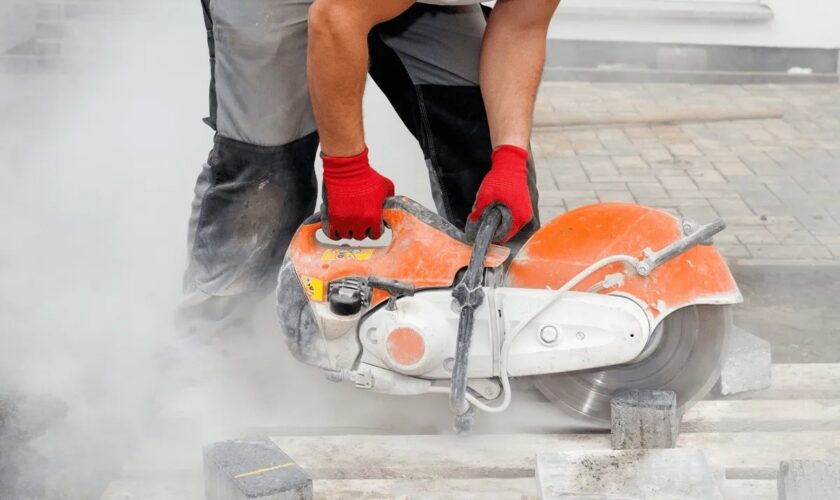
These can include cutting paving slabs, drilling concrete, grinding masonry, chasing walls, breaking up stone, crushing materials and dry sweeping contaminated surfaces.
The amount of exposure depends on several factors, including the silica content of the material, the tools and processes used, how long the activity continues, ventilation and the effectiveness of dust control measures.
An important point to understand is that silica dust exposure isn’t always obvious.
Workers may be able to see clouds of dust during cutting or grinding, but the absence of visible dust does not necessarily mean that airborne respirable particles are absent.
This is why relying on appearance alone is not a suitable method of determining whether exposure is adequately controlled.
Appropriate assessment, safe working methods and effective engineering controls are essential.
What Are the Health Risks of Silica Dust Exposure?
Breathing in respirable crystalline silica can damage the lungs and contribute to serious occupational diseases.
Some health effects develop gradually, meaning workers may not recognise the consequences of exposure until significant damage has occurred.
Silicosis
Silicosis is a serious occupational lung disease caused by inhaling respirable crystalline silica.
The condition involves scarring of lung tissue, which can progressively affect breathing and reduce lung function.
Symptoms may include persistent coughing, shortness of breath and increasing difficulty undertaking physical activities.
Silicosis is irreversible and can be disabling or fatal. Severe exposure may cause disease to develop more rapidly.
Chronic Obstructive Pulmonary Disease (COPD)
Exposure to silica dust can contribute to chronic obstructive pulmonary disease, a group of conditions that restrict airflow and make breathing more difficult.
People affected may experience persistent breathlessness, coughing and reduced exercise tolerance.
Lung Cancer
Respirable crystalline silica is a recognised cause of occupational lung cancer.
The risk reinforces the importance of preventing unnecessary exposure rather than waiting until workers develop respiratory symptoms.
Other Health Concerns
Occupational exposure to respirable crystalline silica has also been associated with other health problems, including kidney disease.
Because some conditions can develop after prolonged exposure or may not become apparent for many years, preventing exposure is far more effective than relying on the early recognition of symptoms.
Our Silica Dust Awareness Course explores the diseases associated with silica dust inhalation and examines the real-life impact occupational respiratory illness can have on individuals and their families.
Silica Dust Regulations and UK Workplace Responsibilities
In the UK, employers have legal responsibilities to protect workers from hazardous substances, including respirable crystalline silica.
The principal legislation is the Control of Substances Hazardous to Health Regulations 2002 (COSHH), alongside wider duties under the Health and Safety at Work etc. Act 1974.
Under COSHH, employers must assess the risks associated with exposure to hazardous substances and prevent exposure where reasonably practicable.
Where exposure cannot be prevented, it must be adequately controlled.
For work involving silica-containing materials, this means employers need to consider which activities could generate respirable dust, who may be exposed and what measures are necessary to protect them.
Suitable controls may include alternative work methods, engineering controls, appropriate equipment, training, supervision and respiratory protective equipment where required.
Employers must also ensure that relevant control measures are maintained, workers receive suitable information and instruction, and appropriate health surveillance is provided where the regulatory criteria are met.
Employees also have responsibilities to follow safe working procedures, use provided protective equipment correctly, cooperate with workplace safety arrangements and report problems with control measures.
Our silica dust training introduces these responsibilities and helps delegates understand why effective dust management is a legal and practical workplace requirement.
What Are the UK Silica Dust Exposure Limits?
The UK workplace exposure limit for respirable crystalline silica is 0.1 mg/m³, measured as an eight-hour time-weighted average.
This limit is set out in the Health and Safety Executive’s workplace exposure limits guidance, EH40.
However, understanding silica dust exposure limits involves more than simply knowing the numerical value.
The limit is not a target concentration or a guarantee that exposure below it is completely safe.
Because respirable crystalline silica is a hazardous substance capable of causing serious disease, employers must apply appropriate controls and reduce exposure as far as reasonably practicable.
Workplace exposure may need to be evaluated through suitable assessment and, where necessary, occupational hygiene monitoring.
Workers should not assume that an activity is safe simply because dust is not visible.
Understanding the importance of silica dust regulations and exposure control is a key part of developing effective workplace awareness.
How Can Silica Dust Exposure Be Prevented?
Effective silica dust exposure prevention begins by considering whether the dust-generating activity can be avoided or the process changed.
Where exposure cannot be eliminated, employers should introduce suitable measures to minimise the amount of airborne dust produced and inhaled.
Use Dust Suppression Methods
Water suppression systems can reduce the amount of airborne dust generated during certain cutting, drilling and grinding activities.
Equipment should be appropriate to the task and operated in accordance with the manufacturer’s instructions.
Use On-Tool Extraction
Suitable extraction systems can capture dust close to where it is generated.
For many tasks, effective on-tool extraction using appropriately specified dust extraction equipment can significantly reduce airborne contamination.
Choose Safer Working Methods
Selecting materials, tools and processes that generate less dust can help reduce exposure at source.
For example, using pre-cut materials or alternative installation methods may reduce the amount of cutting required on site.
Avoid Dry Sweeping and Compressed Air Cleaning
Dry sweeping and blowing dust from surfaces using compressed air can cause settled particles to become airborne again.
Appropriate dust-class extraction equipment and suitable cleaning methods should be used instead.
Provide Appropriate Respiratory Protective Equipment
Where respiratory protective equipment (RPE) is necessary, it must be suitable for the task and exposure conditions.
Tight-fitting RPE requires appropriate face-fit testing and correct use. RPE should support effective exposure control rather than automatically replacing suitable engineering measures.
Provide Information, Training and Supervision
Workers need to understand which activities create silica dust, why exposure is dangerous and how the required controls should be used.
This is where Silica Dust Awareness training can play an important role.
Our online course helps employees and supervisors develop the knowledge needed to recognise potential exposure and understand the precautions used to manage it.
Why Is Silica Dust Awareness Training Important?
Silica dust can be particularly dangerous because its most harmful particles may be invisible and the consequences of exposure may not become apparent for years.
Without appropriate knowledge, workers may underestimate the risks associated with familiar activities such as drilling concrete, cutting paving slabs or grinding mortar.
Silica Dust Awareness training helps address this by explaining the relationship between materials, workplace activities, airborne dust and long-term respiratory health.
For employers, providing suitable training can form part of a wider approach to managing occupational health risks and meeting relevant duties under COSHH.
For employees, understanding the hazards can help them recognise when precautions are required, use controls correctly and raise concerns when working conditions appear unsafe.
Training alone does not make a hazardous activity safe, and completing an awareness course does not replace task-specific instruction, exposure assessment or suitable protective measures.
However, effective awareness training provides an important foundation for safer working practices.
Why Choose Online Silica Dust Training with SAMS LTD?
At SAMS LTD, we recognise that employers and employees need accessible health and safety training that can fit around busy working schedules.
Our Silica Dust Awareness Course online is delivered through video e-Learning, allowing delegates to work through the training modules at their own pace.
This means workers can develop their knowledge without needing to travel to a classroom training centre or attend a scheduled group session.
For businesses with employees working across different sites, silica dust training online can offer a convenient way to provide consistent awareness training.
The course is also suitable for individuals who want to improve their understanding of occupational dust hazards and the responsibilities associated with working around silica-containing materials.
With a stated video duration of approximately 45 minutes, the course provides focused training covering the key hazards, health risks, legal duties and exposure control measures.
Book Your Silica Dust Training Course Today
Limited places available on upcoming dates.
Email: info@samsltd.co.uk or via our Contact page
Call: 01843 821406